Sales teams miss deals when they can't tell which prospects are actually in-market. The difference between casual browsing and real buying intent determines whether you waste time or close revenue.
Sales and marketing teams need to distinguish between casual inquiries and genuine buying intent. When you know who's actually in-market, you focus on deals that close instead of chasing dead ends.
For example, website visits to your product pages are a good sign, but the prospect might just be curiously browsing around without any explicit intent to buy.
Buying signals show which prospects are in-market and ready to engage. Here's how to identify them and act on them.
What are buying signals?
Buying signals are digital actions or behaviors that indicate a prospect’s interest in purchasing a product or service. Buying signals offer valuable insights into the buyer’s journey, allowing salespeople to identify potential customers earlier in the sales cycle and tailor their outbound approach in a personalized manner.
These signals include visiting product pages, checking pricing, reading case studies, or engaging on social media.
How do buying signals improve the sales process?
Buying signals help sales teams understand purchase intent and act on it:
Identify potential customers. When you know which buyers are actively considering your product, you focus on prospects who will actually convert.
Initiate timely follow-up. Timing matters in lead generation. Reach out when buyers are receptive, and you'll see higher response rates and faster conversions.
Navigate the sales process more efficiently. When you prioritize leads with strong buying intent and follow up at the right time, you close deals faster.
Offer personalized messaging. When you understand buying signals, you tailor outreach to what each prospect actually cares about. Personalized outreach gets better responses and builds real relationships.
Main types of buying signals
Buying signals fall into three categories.
Fit Data
Fit data focuses on the characteristics of potential customers, including:
Demographics: This includes information like location, which helps tailor marketing efforts to resonate with regional needs and preferences.
Technology usage: When you know what technologies they use, you can assess product compatibility and integration opportunities.
Opportunity Data
Opportunity data focuses on external factors that can influence purchase intent, including:
Company events: When prospects engage with events like product launches or promotions, they're open to hearing more from you.
Leadership changes: When leadership changes, new executives often reassess their tech stack and look for better solutions.
Industry trends: When you track how prospects respond to industry changes, regulations, or competitor moves, you can reach out when your product solves their new problems.
Intent Data
Intent data provides insights into a prospective customer’s level of interest in a specific product or service:
Search behavior: Tracking online searches for related products or services helps identify consumers actively researching similar offerings.
Website activity: Analyzing website visits, especially to product pages or pricing sections, can indicate a consumer is seriously considering a purchase.
Content engagement: Engagement with content like downloading guides or watching tutorials suggests consumers are actively seeking information to learn more.
When you understand these buying signals, you know where prospects are in their buying process and can adjust your approach to match.
11 examples of buying signals to monitor
When sales reps identify buying signals, they know which prospects to target and when to reach out. Here are the most common buying signals to look out for:
1. Downloading gated content
Signal: When prospects download gated content like white papers, ebooks, or webinars, they're not necessarily in-market yet, but they're engaging with your brand and open to learning more.This typically means they're early in the buyer's journey (top of funnel), but they might become in-market later.
Action: Downloading content doesn't always mean a buyer is in-market, but it shows they're open to learning more. Follow up with targeted outreach. Sales professionals can track downloaded content to tailor outreach and multi-threading techniques around the prospect's specific interests. For example, when someone watches a product tutorial about a specific feature, they're likely trying to solve a specific problem. Personalize your outreach by showing how your product addresses that challenge.
2. Engaging with high intent pages
Signal: Long session times, multiple page views, and visits to your pricing page are strong buying signals. When prospects browse product pages, watch demo videos, take product tours, and read case studies, they're in-market and looking for solutions.
Action: Use website analytics to see which pages prospects visit most. This reveals their pain points. See which sections they spend the most time on. Are they looking at pricing, features, or customer success stories? When you understand their browsing behavior, you know what they care about and can personalize your outreach accordingly.
3. Announcing new fundraising
Signal: Companies that recently secured funding often need new tools to support their growth plans.
Action: Reach out thoughtfully. New funding announcements trigger a flood of sales outreach, so your prospects are already overwhelmed. Research the company's recent funding and show how you can support their growth plans or address their new priorities.
4. Appointing new leadership
Signal: When companies bring in new leadership, they often reassess their tech stack to align with the new leader's vision.
Action: Monitor news for leadership changes. Research new leaders' backgrounds and show how your product supports their likely priorities.
5. Researching your product on review sites
Signal: Prospects looking for real-world feedback check third-party review sites and forums. You can't always track this directly, but you should manage your online reputation actively. This includes responding to both positive and negative reviews on relevant sites.
Action: This signal means the prospect is close to deciding and wants validation. Positive reviews and testimonials help them say yes.
6. Involving peers for opinion
Signal: When prospects discuss your solution with colleagues, mentors, or industry contacts, they're moving toward a decision and want buy-in from others. You might hear about this directly or see them mentioning your company/product on social media platforms like LinkedIn.
Action: This signal matters because it shows the internal decision-making process and likely involvement of multiple stakeholders. This can expand the deal size and extend the timeline.
7. Reading your case studies
Signal: When prospects want proof that your solution works for businesses like theirs, they read your case studies. Monitor traffic to your case study section or look for downloads of specific case studies.
Action: This signal means prospects are seriously considering your solution and want concrete proof you can deliver results. Share case studies that match their industry, company size, or use case.
8. Responding positively to cold outreach or sales pitch
Signal: When prospects respond positively to your initial cold sales outreach—email, phone, or DM—they're open to learning more.
Action: This is a good sign—opened emails, returned calls, or direct replies. Follow up with a personalized offer that speaks to what they care about.
9. Signing up for a free trial
Signal: This is a common B2B sales signal. When prospects want to test your product and see if it fits their needs, they sign up for a free trial.
Action: This signal shows genuine interest and a willingness to invest time in evaluating your product. Support them well during the trial, guide them to key features, and make a strong offer to convert them to paying customers.
10. Filling out a form on your website
Signal: When prospects fill out a web form, they want to engage with your brand. This could be requesting a demo, additional information, or subscribing to your content.
Action: Respond quickly with what they asked for—resources, a demo, or specific information. Fast response builds trust.
11. Engaging with your brand on social media
Signal: When prospects like, comment, share, or tag others in your social posts, they're willing to connect with your brand and want to learn more.
Action: Engage directly with them on social media. Share valuable information, answer their questions, and show your expertise.
How to Track Buying Signals
There are three key approaches to tracking buying signals:
1. Utilize Sales Intelligence Tools
Sales and marketing teams use several tools to spot and analyze buying signals.
Sales Intelligence Tools: Sales intelligence tools like UserGems gather and analyze prospect data from multiple sources. They help sales teams identify qualified leads, personalize outreach, and close more deals.
Digital Analytics Tools: Tools like Google Analytics 4 track website behavior (page views, time on site, event tracking) to identify engagement patterns that correlate with increased buying interest.
Social Listening Platforms: Monitor social media for brand mentions, sentiment, and competitor activity to find leads and track market trends.
2. Monitor Your Target Accounts Online
Engage directly with prospects who show buying signals on social media. Respond promptly to comments or questions, offering personalized assistance. This fosters relationships and nurtures leads further down the sales funnel.
Track industry keywords and hashtags to stay informed about broader trends. Don't just listen to conversations directly related to your brand. By following relevant industry discussions, you can capture potential buying signals that may not be explicitly tied to your offering, allowing you to stay ahead of the curve.
3. Segment and Analyze
No data is valuable without effective analysis. Here are some ways you can segment and analyze your data.
Segment website visitors into new and returning categories. Returning visitors are more likely to be further along the buying journey, so their online behavior should be weighted more heavily when analyzing buying signals.
A/B testing your website's CTAs can be highly insightful. By testing different CTAs, you can understand which ones are more effective at triggering buying signals, such as form submissions or video views.
Track and Monitor Buying Signals with UserGems
Anticipate your leads' needs to engage them proactively
Mastering buying signals is the secret weapon of top salespeople. It allows them to understand customer buying intent, personalize outreach, and close more deals. Identifying these signals can be like finding a needle in a haystack.
That’s why UserGems is a game changer.
This innovative sales intelligence platform goes beyond tracking basic data to provide actionable insights into your prospects' behavior and key changes in their environment.
Imagine receiving hundreds of qualified leads in your CRM, every month, when key contacts change their jobs. Or imagine eliminating all manual contact discovery and automatically capturing new buyers that match your persona.
What you can do with UserGems 💎
Automatically identify and prioritize key decision-makers within your target companies, saving you valuable time and effort.
Uncover missing contacts within your target accounts using multithreading, allowing you to connect with the key decision-makers and increase your chances of success.
Integrate UserGems with your CRM to keep your data fresh and ensure your outreach messaging is always relevant and personalized.
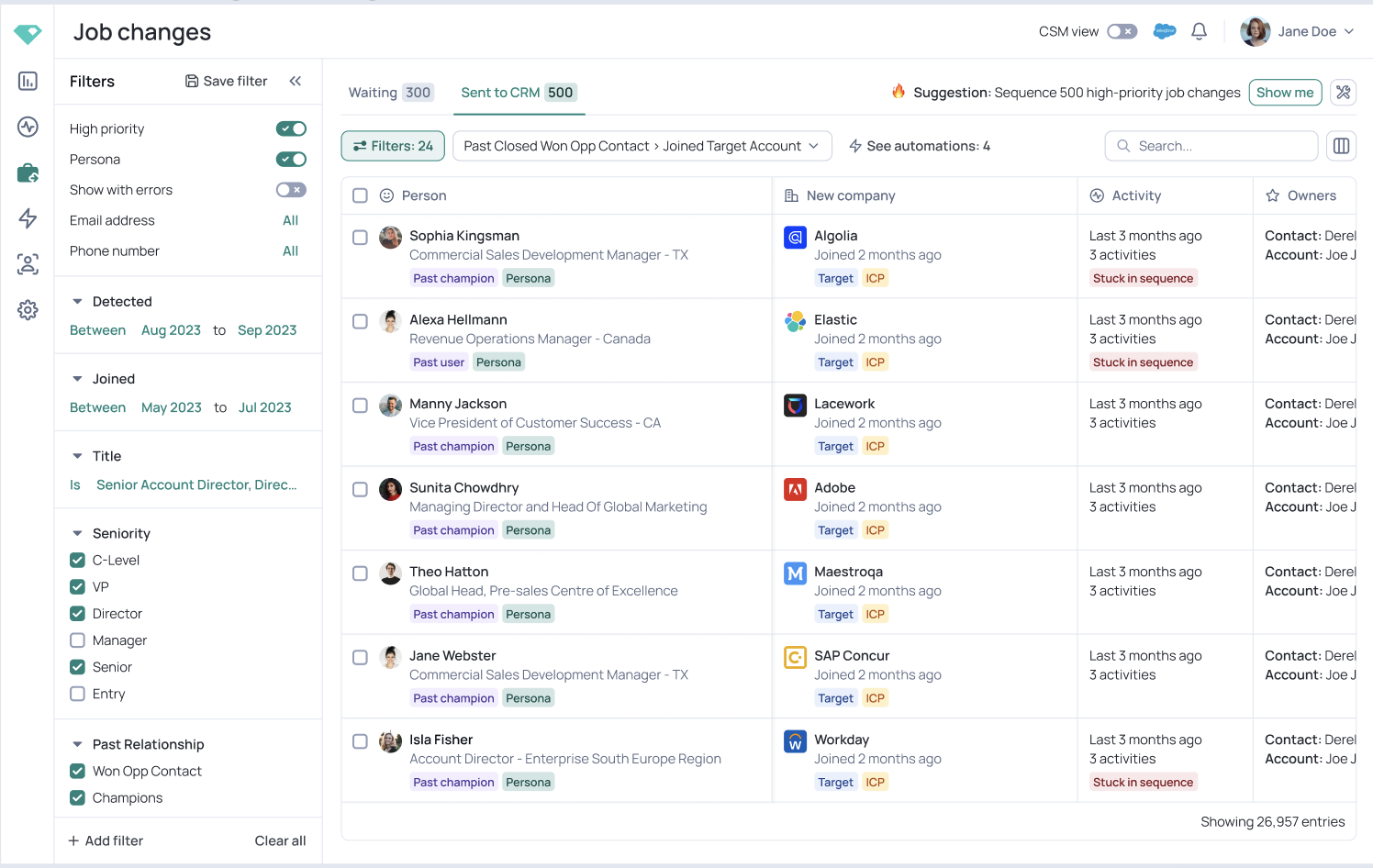
Stop tracking buying signals manually. Start automating this with UserGems.

.png)
.png)
.png)