.png)
What are the best AI ABM email tools with sales integrations?
The best AI ABM email tools in 2026 are UserGems (Gem-E Writing Agent), Clay, Autobound, Unify, Apollo, HubSpot Breeze, Salesmotion and Actively.ai. The right pick depends on two things: how much account and buyer context the tool uses to write each email, and how cleanly it pushes that email into the sales engagement tool (SEP) and CRM your team already runs. A great draft that lives in a separate tab rarely gets sent.
This guide compares each option on those two criteria, with honest watch-outs, so you can shortlist quickly.
What makes an AI email tool good for ABM?
Generic AI writers personalize with a first name and a line from a LinkedIn profile. ABM email needs more. Before you look at vendors, check for these five things:
- Account and buyer context. The tool should know why this account is on your list (fit, intent, recent changes) and why this person matters (role, buying group, history with you).
- Signal-driven timing. The best emails respond to something that just happened: a new executive, a past champion joining, a pricing page visit, a funding round.
- Buying group coverage. ABM means reaching several people at one account with messages that fit each role, without contradicting each other.
- Native sales integrations. Drafts should land in Outreach, Salesloft, HubSpot sequences or your SEP of choice, with activity logged back to Salesforce or HubSpot.
- Guardrails and review. Brand voice controls, approved content, and an easy way for reps to edit before sending.
For a broader look at how signals feed outbound, see what is signal-based outbound.
Best AI ABM email tools compared
- UserGems (Gem-E Writing Agent). Best for teams that want emails driven by contact-level signals and custom scoring. It stands out because it writes from job changes, past champions, new hires and website visits, then pushes the email into your SEP and CRM. Watch-out: it delivers the most value alongside its own signals and scoring.
- Clay. Best for ops-savvy teams that like building their own workflows. It stands out for its huge flexibility across data sources and AI prompts. Watch-out: someone has to set it up and maintain it, and output quality depends on your prompts.
- Autobound. Best for reps who want AI drafts inside their existing SEP. It stands out for research-driven personalization, shown where reps already write. Watch-out: it's lighter on account prioritization and ABM orchestration.
- Unify. Best for teams that want signals and sequencing in one place. It stands out for combining intent signals with automated plays. Watch-out: it overlaps with your SEP, so check how it fits alongside your existing sequences.
- Apollo. Best for SMB and startup teams on a budget. It stands out for bundling a database, sequencing and AI writing together. Watch-out: personalization depth and data accuracy vary by segment.
- HubSpot Breeze. Best for teams already standardized on HubSpot. It stands out for being native to HubSpot CRM and sequences. Watch-out: it's limited outside the HubSpot ecosystem, and its signal depth depends on your data.
- Salesmotion. Best for AEs doing deep account research. It stands out for account insights and research summaries on strategic accounts. Watch-out: it's built more for research than for high-volume email.
- Actively.ai. Best for enterprise revenue teams that want AI agents working their accounts continuously. It stands out for "Per-Account Agents," one AI agent per account that monitors signals, prepares research, and drafts deliverables like briefs and emails. Watch-out: it's an agent layer that sits across your whole revenue process, so it's more than an email tool, and it's priced and scoped for enterprise teams. Confirm how its output reaches your SEP and CRM before buying.
UserGems (Gem-E Writing Agent)
UserGems is the AI command center for outbound and ABM. The Gem-E Writing Agent writes personalized emails using the signals and context UserGems already captures: a past champion who changed jobs, a new VP in your target persona, a promotion into a buying role, or a named person on your pricing page. It can also pull in relevant content like customer stories and guides.
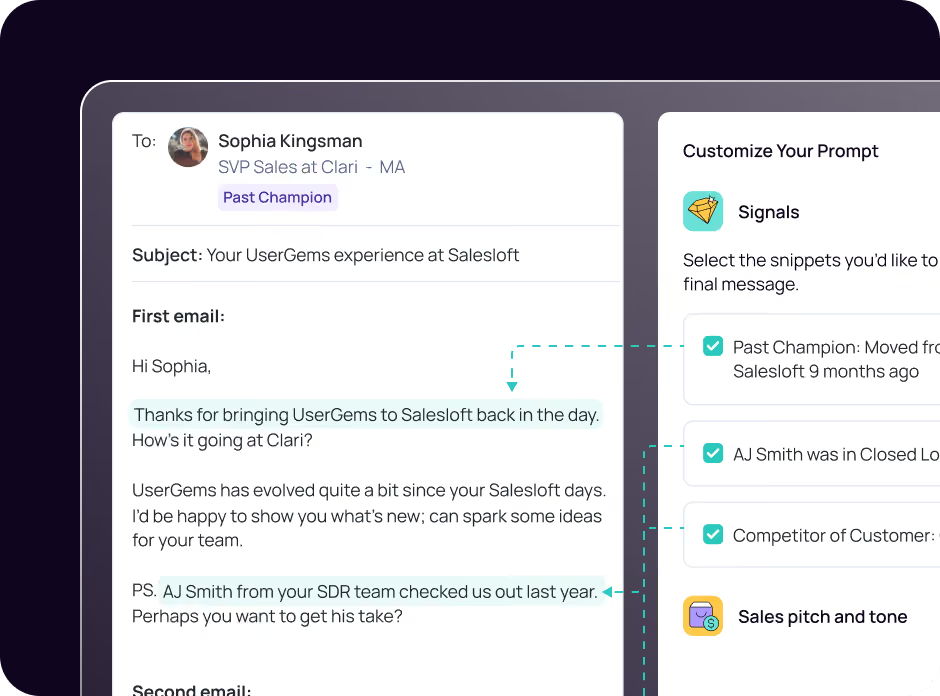
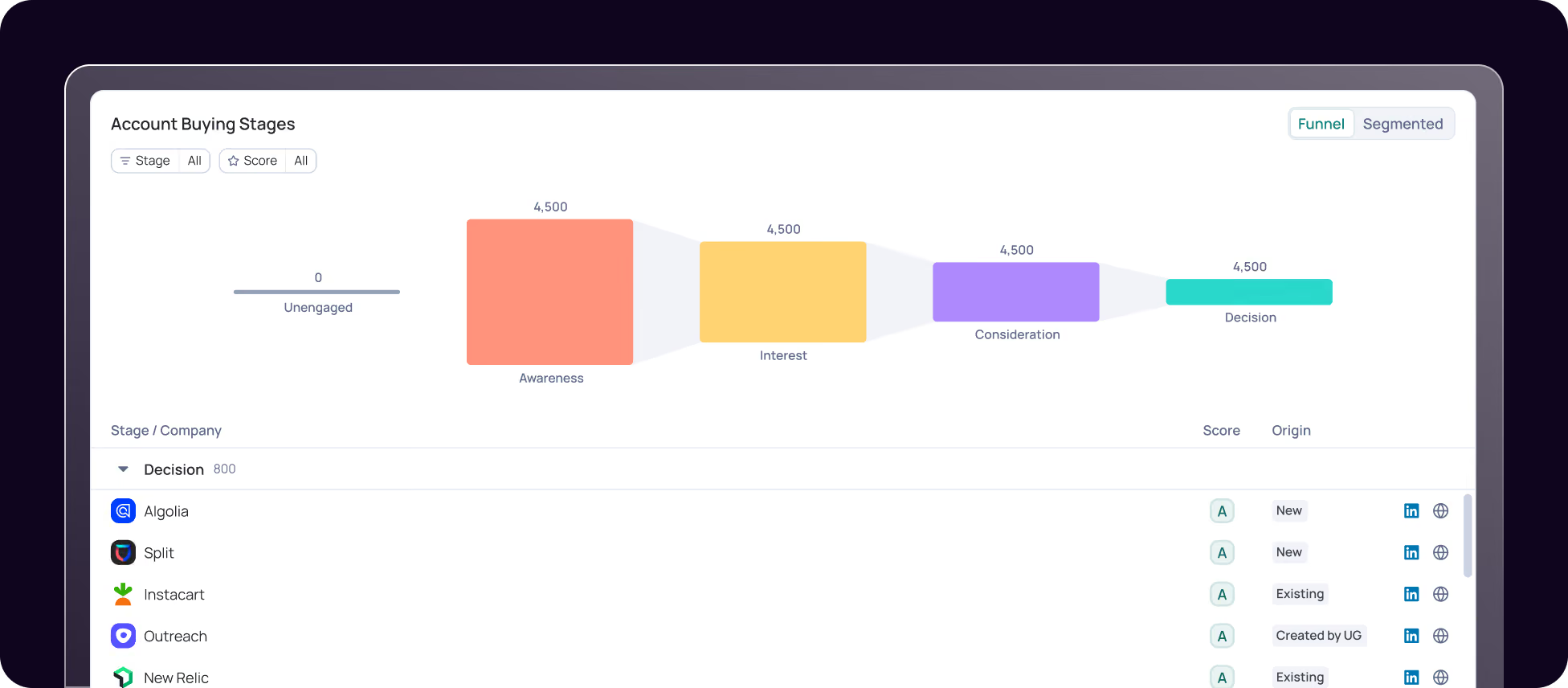
What makes it an ABM fit is the rest of the command center. The Scoring Agent ranks accounts and contacts using 600+ ICP fit criteria and signals, trained on your own sales history. The ABM Agent syncs ad audiences and tracks Buying Stages. So the email knows why the account matters and who else in the buying group is being reached.
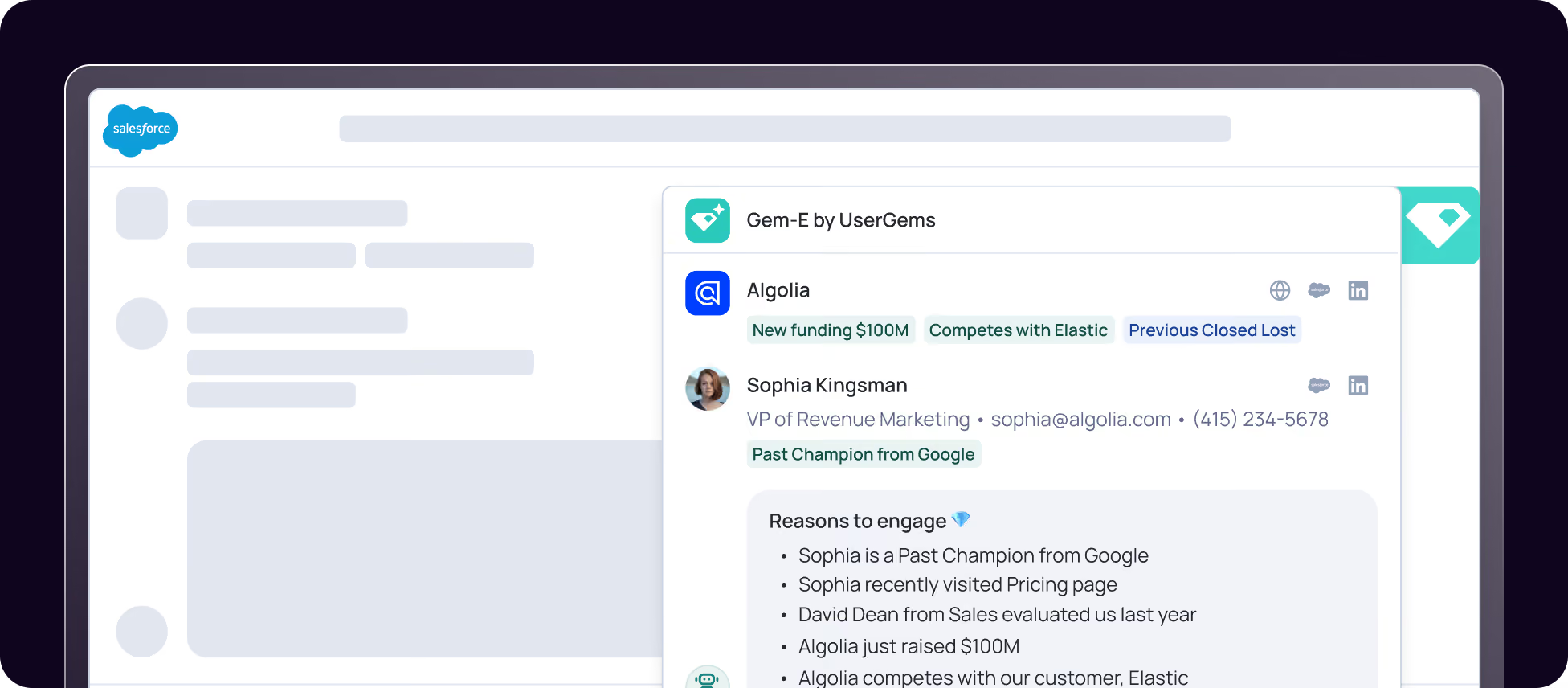
On integrations, UserGems leaves sending to your existing system of action. Emails flow into your SEP (Outreach, Salesloft, HubSpot and others) and activity lands in your CRM. The AI Chrome Extension shows context and drafts inside Salesforce, HubSpot or your SEP.
Customers have seen 2X SDR outbound capacity and a 50% reduction in ABM process time. More on the agent in Gem-E vs other AI SDRs.
Choose it if: you want emails triggered by real buyer changes and you want to keep your existing SEP.
Clay
Clay is a flexible data and workflow builder. Teams pull from many data providers, run AI prompts to research accounts, and generate personalized lines at scale. It connects to most CRMs and SEPs.
The tradeoff is effort. Someone on your team needs to design and maintain the tables, prompts and logic. When that person is strong, Clay is powerful. When they leave, workflows can break quietly.
Choose it if: you have a GTM engineer or ops lead who enjoys building.
Autobound
Autobound focuses on AI-generated, research-driven email drafts delivered inside the tools reps already use. It pulls in insights about prospects and companies and suggests personalized copy.
It's a good fit for individual rep productivity. It does less on deciding which accounts to prioritize or coordinating a multi-channel ABM program.
Choose it if: your account list is set and you mainly want faster, better first drafts.
Unify
Unify combines intent signals with automated outbound plays. It watches for signals, then triggers sequences and AI-written emails.
Because it includes its own sequencing, check how it coexists with Outreach or Salesloft if you already run one. Some teams like the all-in-one approach. Others prefer to keep one SEP as the system of action.
Choose it if: you want signals and sending in one product and don't have a heavily customized SEP.
Apollo
Apollo bundles a contact database, sequencing and AI writing at an accessible price. It's popular with startups and SMB sales teams.
For ABM specifically, buyers often note that personalization is lighter and data accuracy varies, especially in enterprise or international segments. It works best for high-volume outbound with simpler targeting.
Choose it if: budget and speed matter more than deep account context.
HubSpot Breeze
Breeze is HubSpot's AI layer. If your CRM, marketing automation and sequences already live in HubSpot, it can draft emails with CRM context without new integrations.
Its signal depth depends on what's in your HubSpot instance. External buying signals like job changes or contact-level website visits typically need another source.
Choose it if: you're all-in on HubSpot and want the simplest setup.
Salesmotion
Salesmotion helps AEs research strategic accounts, summarizing news, filings and changes into usable insights for outreach.
It's strongest for a small number of high-value accounts. Teams running ABM across hundreds or thousands of accounts may need more automation on top.
Choose it if: your AEs own a short list of big accounts and need better research.
Actively.ai
Actively.ai uses custom AI models to help teams decide which accounts to pursue and how to message them. It's a newer entrant with an AI-first approach to account selection.
As with any newer option, ask for references in your segment and confirm how outputs move into your SEP and CRM.
Choose it if: you're open to newer vendors and want AI-led account selection.
How to choose the right AI ABM email tool
Start with where your gap really is:
- If reps don't know who to email: prioritize signals and scoring first. Writing comes second.
- If reps know who but write slowly: a drafting assistant inside the SEP may be enough.
- If you have strong ops talent: a builder like Clay gives maximum control.
- If you're a lean team: favor tools that work out of the box and push into your existing stack.
Whatever you pick, run a pilot on a real account list and measure replies and meetings. Open rates won't tell you much. Our playbook for boosting outbound reply rates has a good test structure. Peer reviews on G2 are also useful for checking integration quality.
FAQ
What is an AI ABM email tool?
It's software that uses AI to write personalized emails to target accounts and their buying groups, using account context like fit, intent and recent changes, and then sends or queues those emails through your sales tools.
Do AI email tools replace my sales engagement platform?
Some include sequencing, but most teams keep their SEP as the system of action. Tools like UserGems send drafts and next actions into Outreach, Salesloft or HubSpot instead.
Which integrations matter most?
Your CRM (Salesforce or HubSpot) for context and logging, and your SEP for sending. Ad platform and marketing automation sync matters if you run multi-channel ABM.
How do I keep AI emails on brand?
Look for voice controls, approved content libraries and a human review step before send. Start with rep approval on every email and loosen it as quality proves out.
What signals make ABM emails perform best?
Person-level changes tend to beat generic account intent: past champions changing jobs, new hires or promotions in your persona, and named website visits. See our guide to buyer intent signals.
Write fewer, better ABM emails
Most ABM email falls flat for a simple reason: it doesn't know why this person, at this account, should care today. UserGems fixes that at the source. Gem-E spots what changed, scores who matters, writes the email, and drops it into the SEP your team already lives in. See how Gem-E for ABM works, and put the money-back guarantee tied to pipeline and revenue to the test.
.png)
.jpg)