.png)
TL;DR
- The six pillars that actually differentiate sales signal platforms are signal sourcing, scoring methodology, integration depth, execution capability, commercial structure, and, new for 2026, AI-drafting data grounding.
- Most evaluations fail because they compare feature checklists instead of testing one real account live. Ask any vendor to identify, score, and draft outreach for a single named buying committee, on the spot, and you will learn more in ten minutes than a month of demos.
- Platforms that can only flag an account, with no named contact, no transparent score, and no drafted next step, are built for reporting rather than pipeline.
- UserGems is built to score well across all six pillars, including a scoring model trained on your own historical sales data and a money-back guarantee tied to pipeline and revenue.
Why most signal platform evaluations fail
Most teams evaluate sales signal platforms with a feature checklist, essentially a spreadsheet of checkmarks across a dozen vendors, and end up deciding based on price and brand familiarity because the checklist never actually differentiated anything meaningful.
The root problem is that feature checklists measure presence rather than performance. Every vendor claims to have intent data. Every vendor claims to have scoring. What the checklist cannot show you is whether that scoring is trustworthy, whether the platform acts on a signal or just reports it, and whether your reps will still be using it six months from now.
The six pillars below are the ones that actually separate platforms that generate pipeline from platforms that generate dashboards nobody opens.
Pillar 1: What signal sourcing actually covers
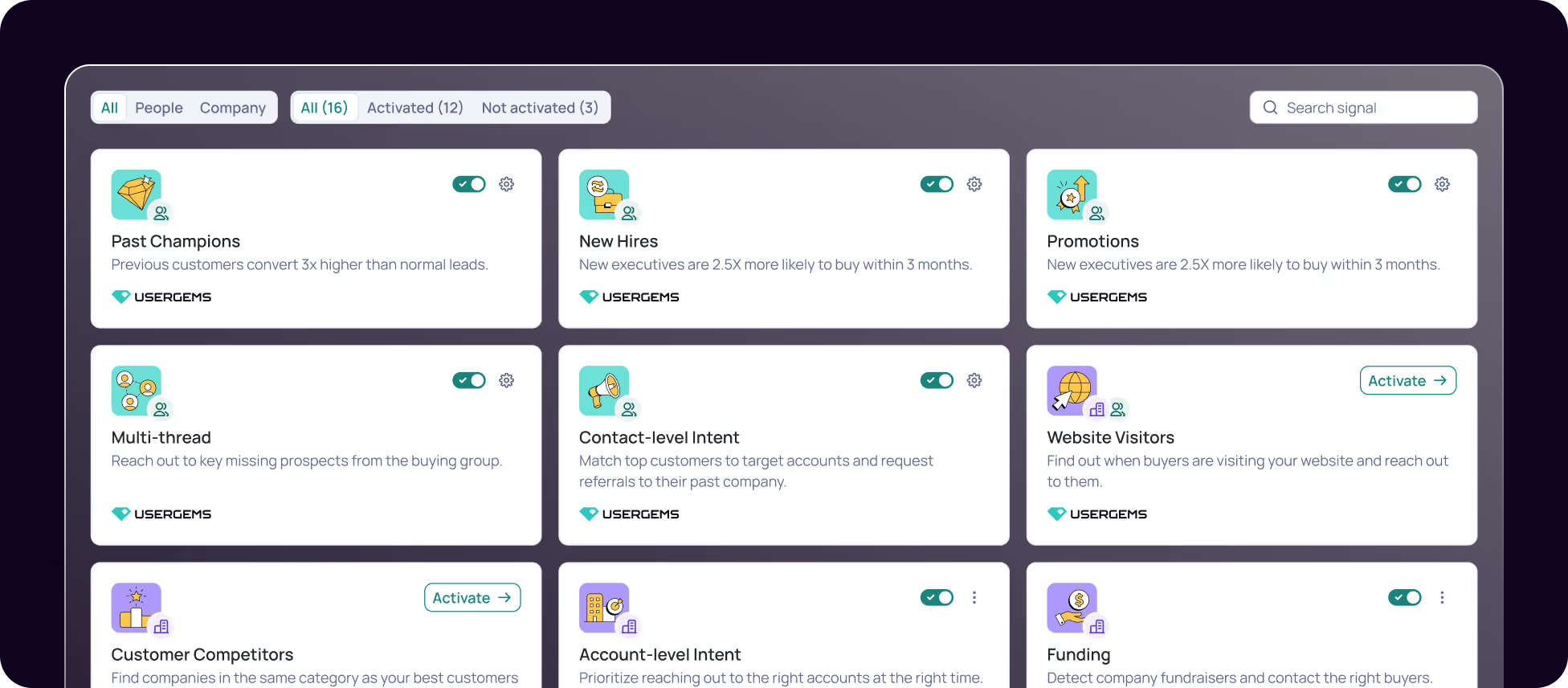
Signal sourcing is the breadth and resolution of the data a platform captures, spanning contact-level intent, account-level intent, job changes, tech stack shifts, funding events, and website de-anonymization, plus whether it can ingest your own first-party data such as CRM history, call transcripts, and email content.
The broader and more contact-resolved the signal sourcing, the more precise the resulting prioritization becomes. Platforms that only capture account-level signals can tell you that a company is in-market, but they cannot tell you which specific person to contact or why that person matters. That gap is exactly where most "we have intent data but no pipeline" complaints begin.
When you evaluate this, ask whether the platform resolves signals down to a named contact or only to an account level, and ask whether it can ingest first-party data you already have, like Gong transcripts, closed-lost history, or CRM activity, rather than working only with third-party feeds.
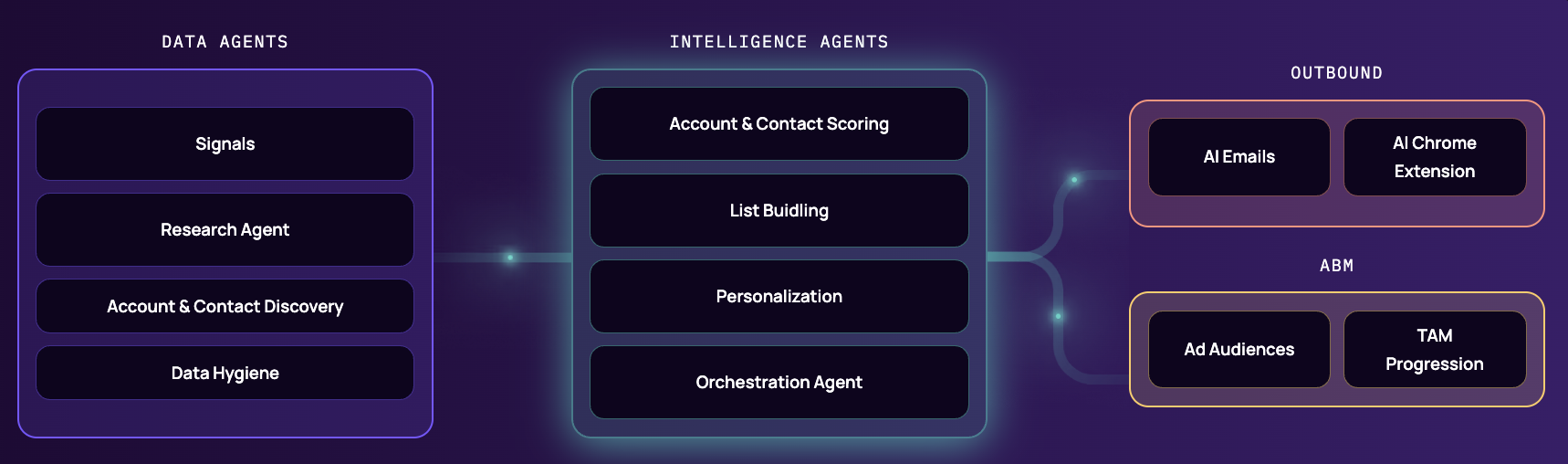
UserGems approaches this through Data Agents, which capture contact-level and account-level intent, job changes, tech stack shifts, M&A activity, and 10-K filings, while also ingesting first-party sources like CRM data, call transcripts from Gong, calendar data, and email content. That combination means scoring runs on your actual buyer history instead of generic market noise.
Pillar 2: What makes a scoring methodology trustworthy
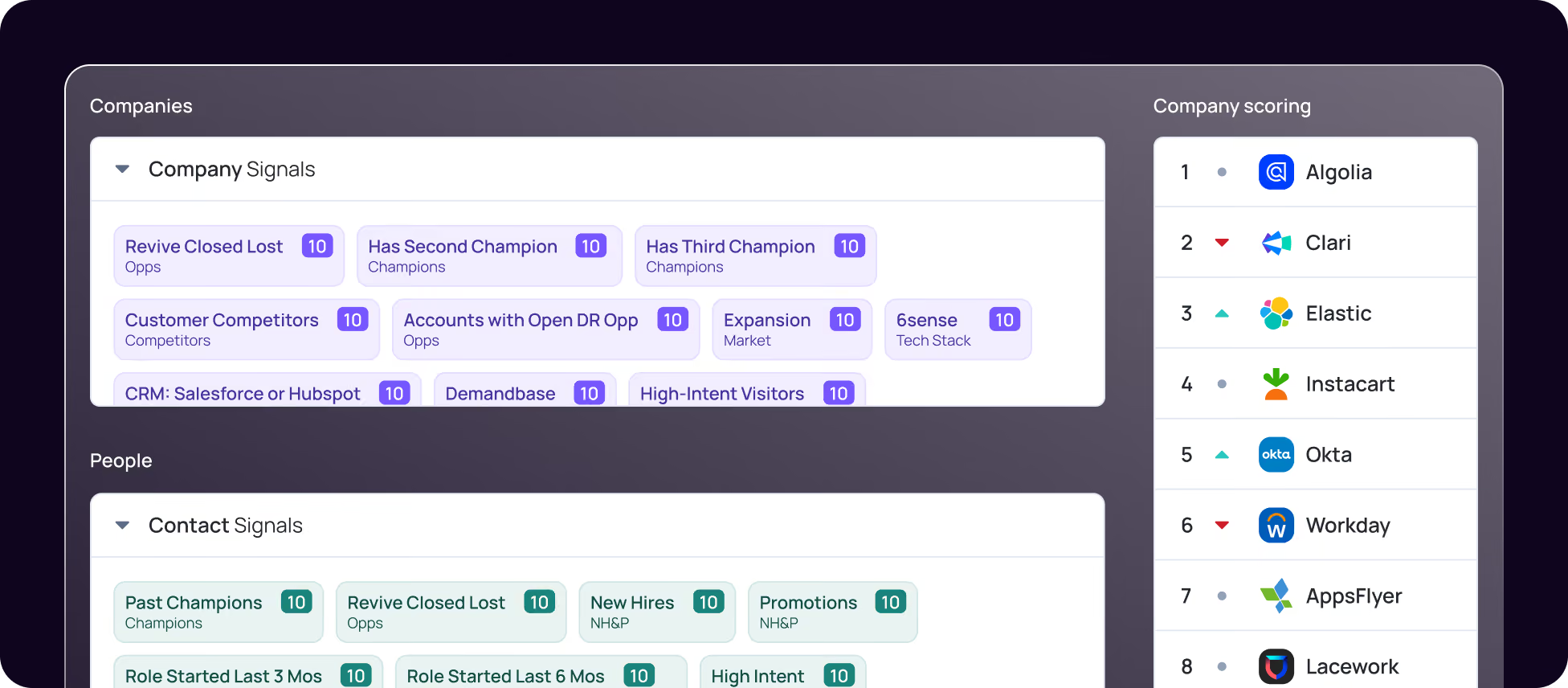
Ask directly whether the scoring model is built on your own historical sales data or on an industry-wide benchmark, and ask whether a rep can see exactly which signals drove a given score and override it when they know something the model does not.
A custom model reflects what actually predicts a deal at your specific company, because it was trained on your specific wins and losses. An industry-benchmark model reflects what predicts a deal at other companies, which may or may not resemble yours. Platforms that cannot clearly answer both the "whose data" question and the "can I see why" question tend to see much lower long-term adoption, regardless of how promising the initial pilot looked.
When you evaluate, ask whether the model is trained on your win and loss data or on an industry average, whether a rep can see which signals produced a given score, and whether they can override that score when their own judgment disagrees.
UserGems' Account and Contact Scoring is built from your own historical wins and losses, so no two customers ever end up with the same weights or logic. Every score is explainable and editable, which means reps are never stuck trusting a black box they do not understand.
Pillar 3: What integration depth means in practice
Integration depth comes down to whether the platform delivers native, bidirectional sync with your CRM and sales engagement platform, or whether it only offers a one-way batch export that goes stale between refreshes.
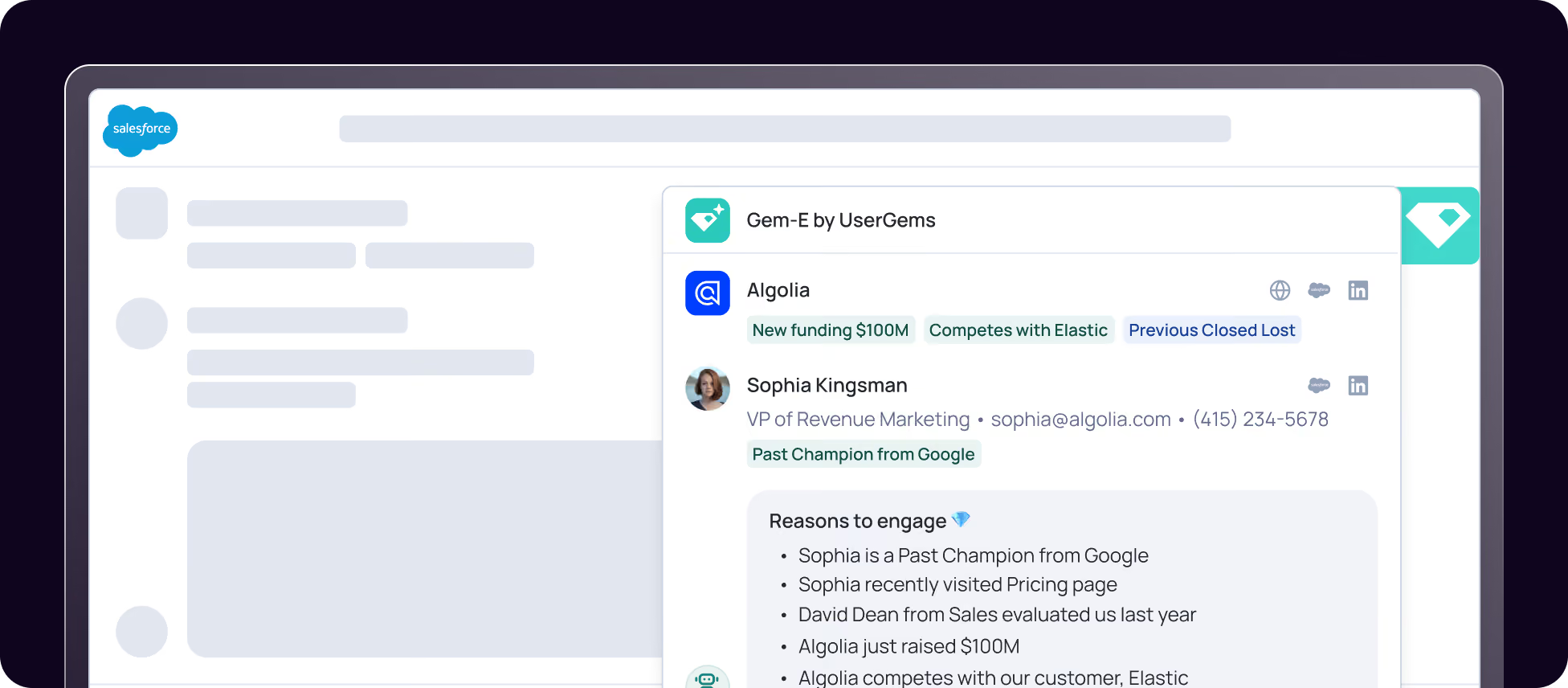
Ask to see the actual in-workflow experience during any demo. Does the rep see the intelligence directly inside Salesforce, HubSpot, or Outreach and Salesloft, or do they have to open a separate tool and remember yet another login? Every extra login a rep has to manage is a real point of adoption failure, even when the underlying data is good.
Is the sync native and bidirectional or just a periodic export? Ask where the rep actually sees this information in their day-to-day work rather than in a standalone dashboard.
UserGems addresses this through the Chrome Extension, which surfaces signals and scores wherever reps and marketers already work, including Salesforce, HubSpot, and your sales engagement platform, without requiring a new login or a new tab.
Pillar 4: What separates detection from execution
Execution capability is whether the platform drafts a personalized email and enrolls the contact into a sequence automatically, or whether it simply flags the signal and leaves a rep to act on it manually, and it also covers whether the platform builds and syncs ad audiences without a manual export and import step.
This is where most platforms fall short in practice. Detecting a signal is genuinely the easier half of the problem. The gap between detection and action is exactly where "we have the data but no pipeline" complaints come from, and that gap rarely shows up anywhere on a feature list.
Ask what happens the moment a signal fires. Does a human have to do everything manually from that point forward, or does the platform draft the outreach and enroll the contact automatically? Does building an ad audience require exporting a spreadsheet and importing it elsewhere, or does it sync natively?
UserGems' Gem-E agents draft personalized emails using the specific signal and context behind each one, enroll contacts into sequences, and sync ad audiences automatically, which turns a detected signal directly into an outbound or ABM action instead of another item on a rep's to-do list.
Pillar 5: Commercial structure and pricing
Look at whether the platform is modular, meaning you can adopt one capability and expand later rather than committing to everything at once, how pricing scales with your account and contact volume, and whether the vendor ties any part of pricing to actual outcomes.
A vendor willing to back its platform with a money-back guarantee tied to pipeline and revenue is signaling genuine confidence in execution rather than just detection. Vendors that only offer annual, all-or-nothing contracts with no outcome tie are effectively asking you to absorb all the risk yourself.
When you evaluate this pillar, ask whether you can start with a single capability and expand from there, or whether the vendor requires an all-or-nothing commitment, and ask whether any part of the pricing depends on measurable results.
UserGems is modular, so you can adopt Data Agents, Intelligence Agents, or the full command center, and you can bring your own data sources into the mix. Pricing is backed by a money-back guarantee tied to pipeline and revenue, so if UserGems does not generate at least the value of the contract, you get a refund.
Pillar 6, new for 2026: What data grounds the AI-drafted outreach
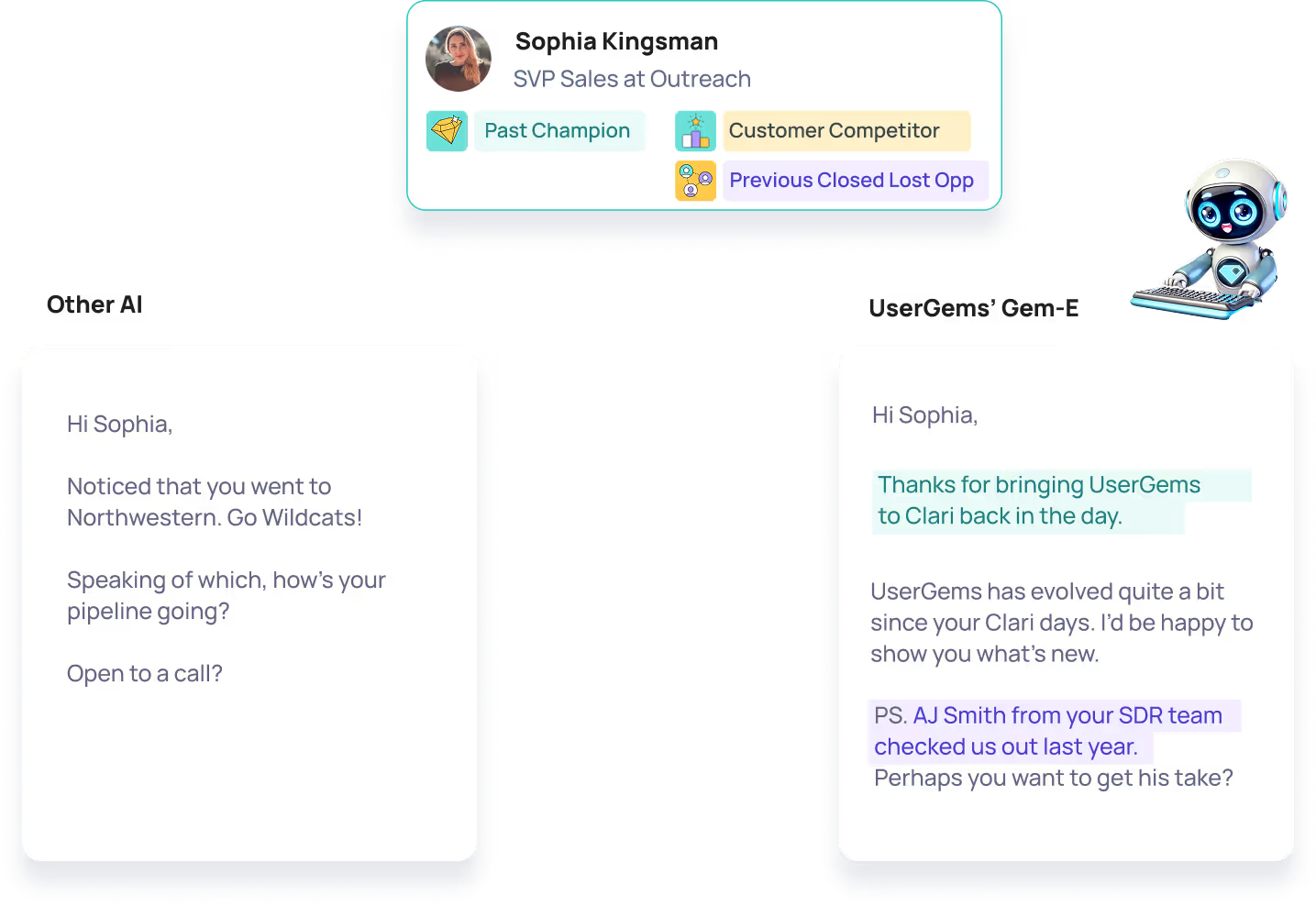
As more platforms lean on AI to draft outreach directly, it is worth asking specifically what data that draft is actually grounded in. An email built from a generic language model with no real connection to your signal and scoring data will read fluently on the surface but ultimately say nothing a prospect could not get from a generic template.
An email grounded in the actual triggering signal, whether that is a job change, a specific page visited, or a buying-committee role, reads as genuinely relevant because it truly is relevant. This distinction is easy to miss during a polished demo and important to test directly with a real account before you sign anything.
Our advice: ask the vendor to draft an email live for a real target contact and to show you exactly which signal and data points that draft actually pulled from.
UserGems' Writing Agent drafts outreach using the specific signal and context that triggered it, rather than running a generic language model pass, and it can also include relevant proof points like customer stories or guides where they strengthen the message.
The playbook: how to run this evaluation this week
- Pick one real target account with a known buying committee. This should be an actual company you are trying to break into, not a hypothetical example built for the demo.
- Ask each vendor to run the full exercise live in the room, identifying the specific contacts, showing the score and exactly what drove it, and generating the first outreach step, rather than promising to follow up with results later.
- Test the AI-drafting question directly by asking the vendor to show you which signal and which data points the draft email actually pulled from.
- Check the in-workflow experience by having the vendor show you the intelligence inside your actual CRM or sales engagement platform rather than a standalone dashboard built for demos.
- Ask about the commercial guarantee in writing, and if a vendor claims outcome-based pricing, get the specific terms in front of you before you sign anything.
Proof points
Teams using signal-based scoring alongside automated drafting have seen outbound capacity for SDRs roughly double, since reps spend their time on engagement instead of manual research.
Signal-driven ABM workflows have cut process time in half, moving from a four-week manual build down to roughly two weeks.
Only 7% of teams report being very successful with clear ROI from AI in sales and marketing today, while 45% report limited success with uncertain ROI, according to the State of AI Adoption in Sales and Marketing report. That gap is exactly what a real evaluation, rather than a feature checklist, is meant to close.
UserGems has never lost a head-to-head data accuracy comparison.
Conclusion
A feature checklist will tell you which vendors have a checkmark next to intent data and a checkmark next to AI scoring. It will not tell you whether that scoring is trustworthy, whether the platform acts on signals or just reports them, or whether a drafted email is grounded in something real rather than generic. The six-pillar framework above, tested against one live account, will actually tell you that.
UserGems is built to score well across all six of these pillars. It offers contact-level, multi-source signal capture through Data Agents, a transparent and custom scoring model through Intelligence Agents, native integration with Salesforce, HubSpot, and your sales engagement platform, automatic drafted outreach and ad audience sync through Gem-E, and a modular structure backed by a money-back guarantee tied to pipeline and revenue.
FAQ
What is the single most revealing question to ask during a platform demo?
Ask the vendor to show you, live, how a specific target account's buying committee gets identified, scored, and turned into a first outreach step, rather than simply walking you through how the dashboard looks.
How important is scoring transparency compared to raw accuracy?
Both matter quite a bit, but a highly accurate score that reps cannot understand or trust will still see lower adoption over time than a slightly less precise score that is fully explainable.
Should I evaluate platforms as replacements for my current ABM tool or as additions to it?
You should consider both possibilities. Modular platforms are often easier to adopt as additions, since they let you layer contact-level scoring and execution onto an existing account-level investment without ripping anything out.
What is a realistic timeline to see value from a new signal platform?
You should expect a few weeks to get a usable, scored account list along with your first drafted outreach. Longer timelines than that should raise real questions about the platform's actual time to value.
Why does it matter what data grounds a vendor's AI-drafted emails?
Fluent, generic AI copy with no real connection to the triggering signal will read as relevant on the surface, but it performs like any other template the moment a prospect actually engages with it.
Can I run this framework alongside data I already have from 6sense or Demandbase?
Yes, you can. A truly modular platform should let you bring existing signal or scoring sources in and combine them with its own model, so you should not have to rip out something that already works just to add contact-level precision and execution.
Do I need to replace my sales engagement or marketing automation platform to use a signal platform like this?
No, you do not. The signal and scoring layer should send its output, including scored accounts, drafted emails, and built audiences, into the sales engagement and marketing automation platforms you already use, rather than replacing them.
What is the actual difference between a platform that has AI and one that drives real pipeline?
The real difference is whether the platform stops at a score and a dashboard, or whether it continues on into a drafted, sequence-ready outreach step that is grounded in the specific signal that triggered it.

.png)
.png)
.png)