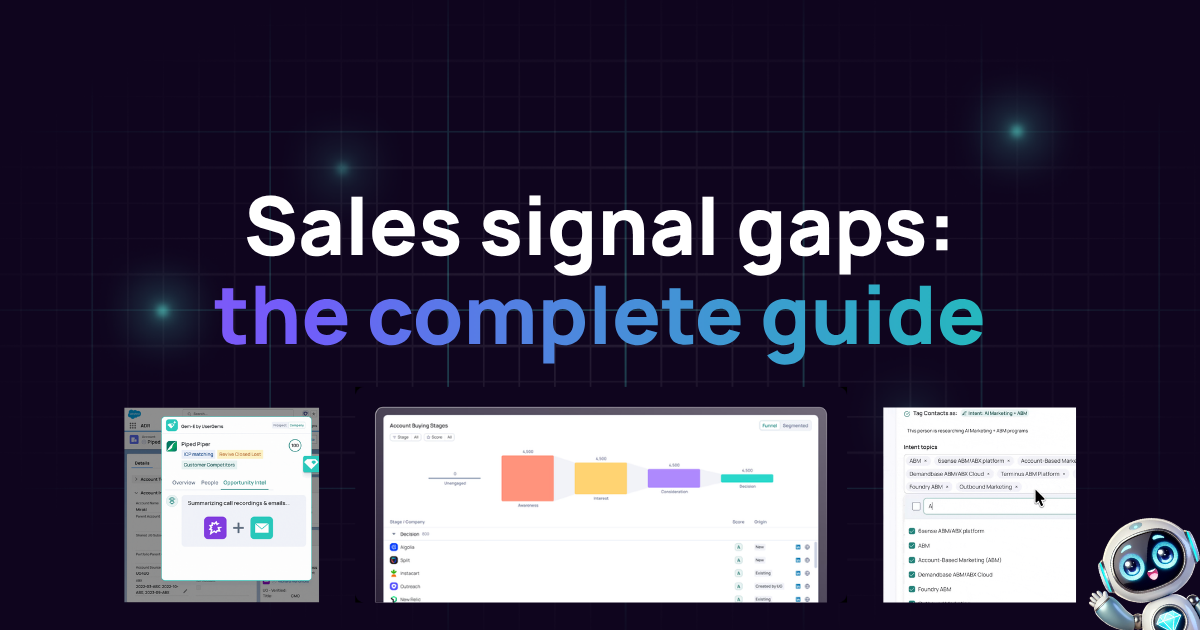
A sales signal gap is any buying signal your team never captures, captures too late, captures but never acts on, or acts on without the context to make the outreach land. Every gap is pipeline that was available and went somewhere else. You close signal gaps by auditing where each signal should come from, measuring coverage and speed-to-action, and routing every signal to an owner with the context they need.
This guide covers the four types of gaps, a signal-by-signal audit checklist, the two metrics that matter, and how an AI command center closes gaps for good.
What is a sales signal gap?
Most teams already "do signals." They have an intent feed, website visit alerts, maybe a list of new hires at target accounts. Signal gaps live in the spaces between those tools. A signal shows up in one system, nobody owns it, and by the time anyone notices, the buyer has already booked a call with a competitor.
If you are new to the idea of building outbound around signals, start with what signal-based outbound is. This guide assumes you have some signals and want to find the gaps.
What are the four types of sales signal gaps?
1. Capture gaps: signals you never see
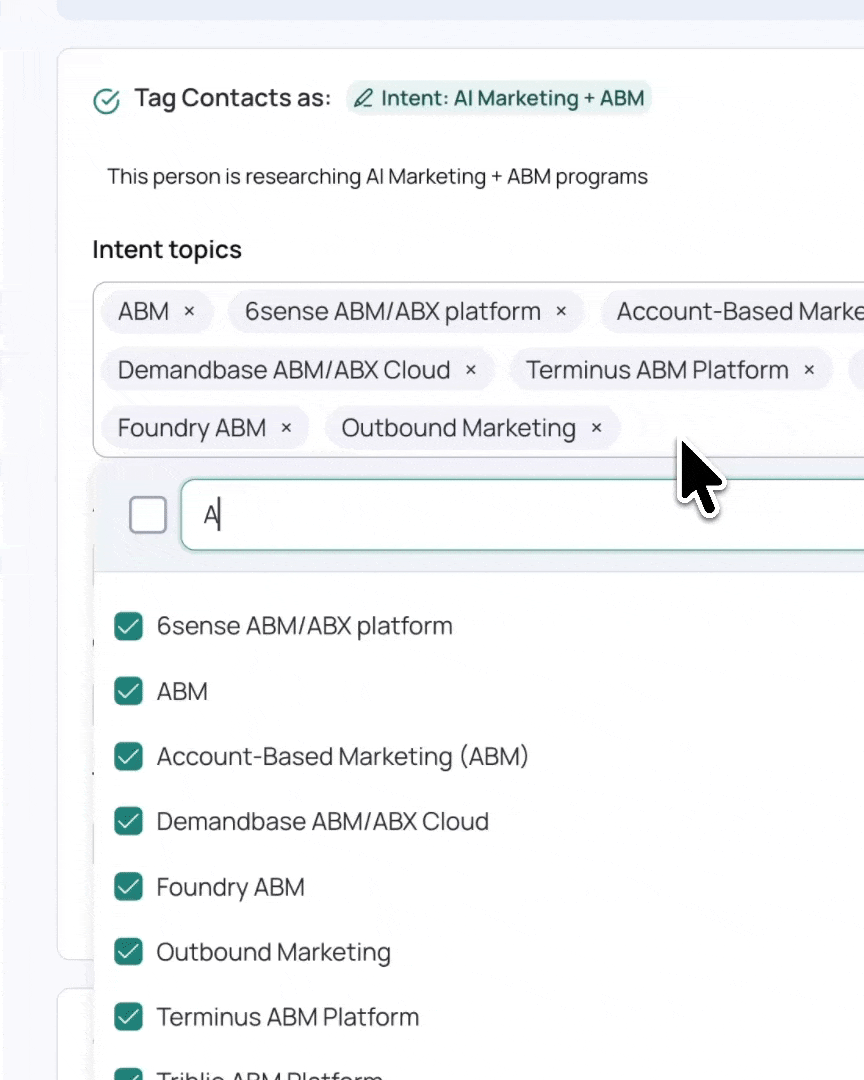
The signal exists, but no tool in your stack picks it up. Common examples: a new VP hired at an open opportunity, a buying group member researching your category at the person level when you only track the account.
2. Latency gaps: signals you see too late
You capture the signal, but weeks after it happened. Monthly list refreshes, quarterly CRM cleanups and batch intent reports all create latency. Research on online sales leads published in Harvard Business Review found that the odds of qualifying a lead drop sharply as response time grows. Outbound signals decay the same way.
3. Action gaps: signals you see but never act on
This is the most common and the most expensive. The signal lands in a dashboard, a Slack channel nobody reads or a CRM field nobody filters on. There's no owner, no routing rule and no next step. Dashboards are where signals go to wait. The fix is to automate what happens after a signal fires.
4. Context gaps: signals you act on without context
A rep sees "intent spike" and sends a generic email. They don't know which topic spiked, who at the account is researching, whether there's an open opportunity, or that the account lost a deal to a competitor last year. The outreach goes out, but it reads like every other email in the inbox.
Sales signal gap audit checklist
Use this checklist to audit your own stack. For each signal, mark whether you capture the signal, how fast, who owns it and whether reps get context.
New hire or promotion at a target account
- Where it should come from: Contact-level data on target accounts
- Common gap: Latency: discovered at the next quarterly list pull
- Fix: Continuous monitoring with weekly or faster refresh, prioritized by role and account score
Account-level intent spike
- Where it should come from: Third-party intent data
- Common gap: Action and context: a company name with no people attached
- Fix: Pair account intent with contact-level signals so reps get named buyers with every logo
- Where it should come from: Person-level intent and engagement data
- Common gap: Capture: most stacks only track the account
- Fix: Add contact-level intent so you know who is researching
Website visits to high-intent pages
- Where it should come from: First-party web data and de-anonymization
- Common gap: Action: alerts go to a channel nobody owns
- Fix: Route visits on pricing or comparison pages to the owner with the page and visitor context
Product usage or engagement
- Where it should come from: Product analytics, MAP engagement
- Common gap: Context: sales never sees it
- Fix: Bring first-party person signals into the same record reps already work from
Closed-lost account re-engages
- Where it should come from: CRM history plus fresh signals
- Common gap: Action: nobody revisits closed-lost
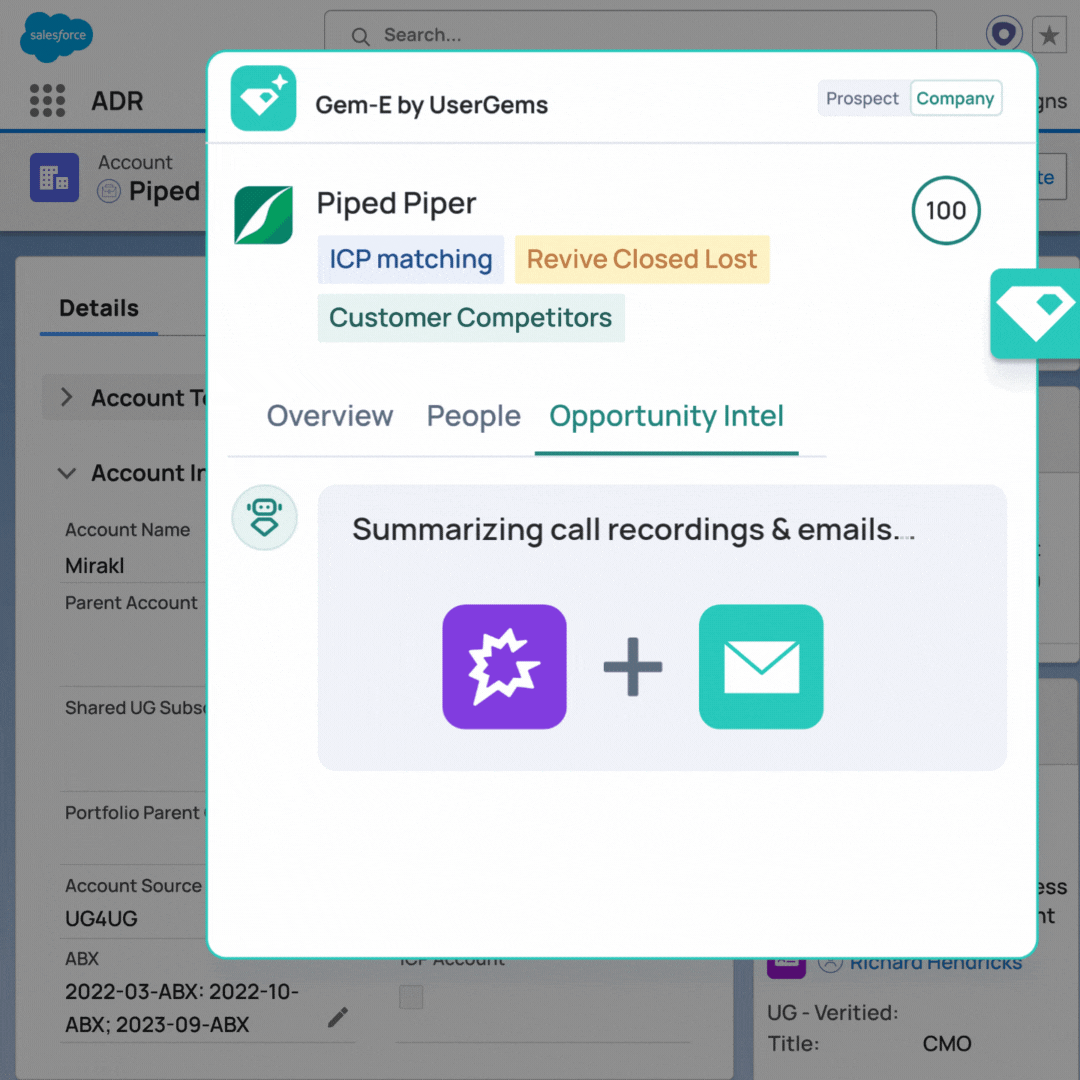
- Fix: Watch closed-lost accounts for new signals and resurface them with the reason they lost
Buying group expansion
- Where it should come from: Contact data mapped to the account
- Common gap: Capture: single-threaded deals
- Fix: Map the buying group and flag missing roles on open opportunities
Company news (funding, M&A, expansion)
- Where it should come from: News and firmographic data
- Common gap: Context: reps don't connect news to a reason to reach out
- Fix: Attach the news to the account with a suggested angle
For a broader list of the signals worth tracking, see our guide to buyer intent signals.
How do you measure signal coverage?
Signal coverage is the share of your target accounts and contacts where you would actually see a signal if one happened. Measure it in three cuts:
- Account coverage: percent of target accounts with at least one active signal source monitoring them.
- Contact coverage: percent of target accounts where you have verified, current contacts across the buying group (a signal you can't attach to a person is half a signal).
- Signal-type coverage: for each signal in the audit checklist, do you capture it at all? Count the signals you can't check off.
Run the audit once, then re-run it quarterly. Coverage drifts as contacts go stale and your CRM decays.
How do you measure speed-to-action?
Speed-to-action is the time from a signal happening to a meaningful touch (email, call, ad impression to the right person). Break it into two parts:
- Signal-to-capture time: how long until the signal shows up in a system your team uses.
- Capture-to-action time: how long until someone (or something) acts on it.
Track both by signal type. You will usually find one or two signals with a capture-to-action time measured in weeks. Those are your biggest gaps. Also track the share of captured signals that get any action at all. If that number is low, more signals will not help. Routing will.
Prioritization matters here too. When every signal is urgent, none are. Our sales signal prioritization guide covers how to rank them.
Why do signal gaps keep happening?
- Fragmented tools. Intent in one tool, new hires in another, web visits in a third. No single view of the account or the buyer.
- Account-only thinking. Buying happens in groups of people, as Gartner's research on the B2B buying journey lays out. Account-level signals miss who is actually doing the work.
- Stale data. Titles, roles and emails go out of date. A signal attached to the wrong contact goes nowhere.
- No owner. Marketing thinks sales has it. Sales thinks marketing has it.
- No scoring. Without a model that says which signals matter for your business, reps either chase everything or ignore everything. Here's how to build a scoring model sales trusts.
How does an AI command center close sales signal gaps?
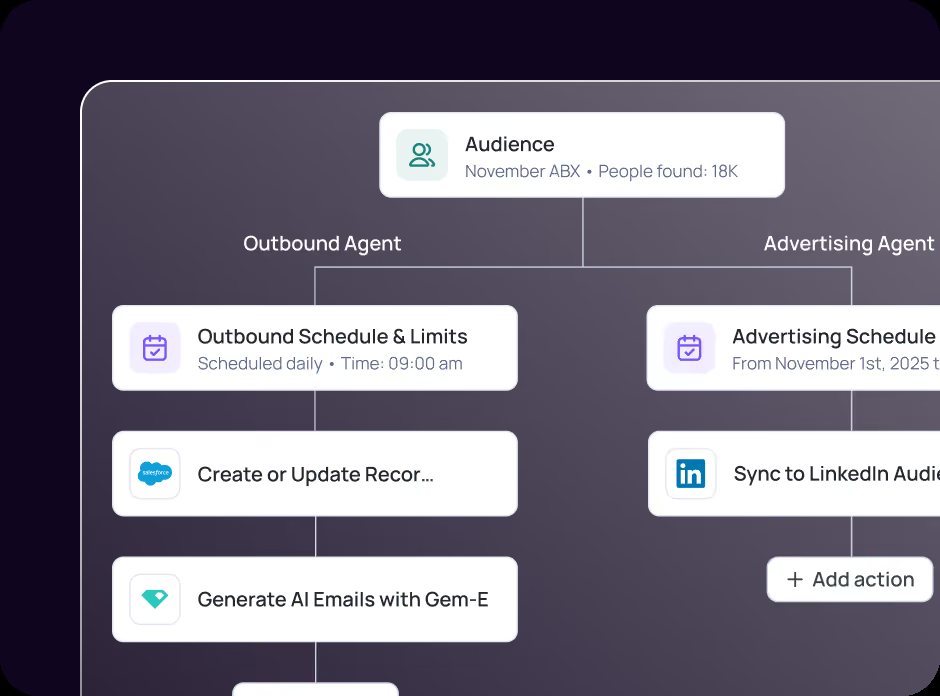
An AI command center sits between your system of record (CRM, data warehouse) and your systems of action (SEP, MAP, ad platforms). It captures signals, decides what matters and makes sure something happens next. Here's how UserGems closes each gap:
- Capture: UserGems Signals track account- and contact-level buying signals in one place: new hires and promotions, buying group changes, contact-level intent across 42,000+ topics, account intent, website visits (including de-anonymized visitors), first-party person signals and news. The Gem-E Research Agent adds custom research on every account and contact, turning what it finds on the web into signals your stack never captured before. Every account and contact stays current automatically, with records added, updated and removed as things change. See UserGems Signals.
- Latency: records refresh continuously, and Data Enrichment keeps CRM contacts current, so signals attach to the right person at the right company.
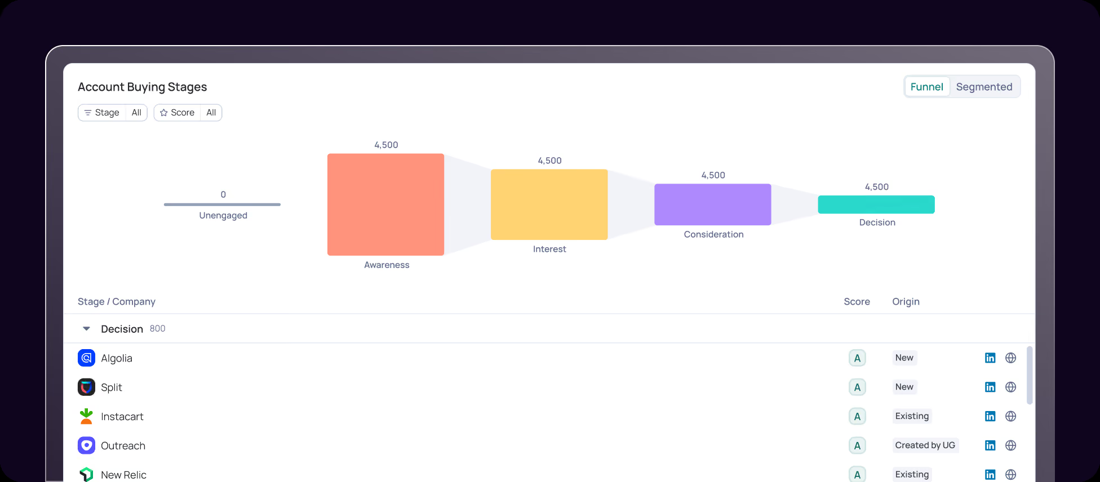
- Action: Scoring & Buying Stages ranks every account and contact using a custom model trained on your wins and losses. Workflows route hot records to the right rep, sequence or ad audience automatically, and Gem-E acts as backup when a rep doesn't. Through the UserGems MCP, you can audit running campaigns from Claude or ChatGPT and get told what's going wrong.
- Context: reps see the reasons behind every score. The Gem-E Research Agent pulls closed-lost context from call transcripts and emails, and the Gem-E Writing Agent drafts outreach based on the signal and account history. Reps get it where they already work: the AI Chrome Extension in Salesforce, HubSpot or their SEP, Slack, or Claude and ChatGPT through the UserGems MCP.
The outputs go into the tools you already use. Your SEP still sends the emails and your ad platforms still serve the ads. More on why dashboards don't get used and what a command center does instead.
Frequently asked questions
What is the most common sales signal gap?
Action gaps. Most teams capture more signals than they act on. The fix is routing and ownership.
How fast should reps act on a buying signal?
As fast as you can without losing context. Set a target by signal type (for example, same day for a high-intent page visit from a known buyer, within a week for a new hire) and tighten the targets as you learn what converts.
Is more intent data the answer to signal gaps?
Rarely on its own. Adding another account-level feed often widens the action gap. Here's why intent data alone isn't enough for outbound. Contact-level signals, scoring and routing usually close more gaps than another data source.
How often should I audit my signal coverage?
Quarterly is a good rhythm, plus any time you change tools or territories. Contacts go stale constantly, so coverage drifts even if your stack stays the same.
Who should own sales signals, sales or marketing?
Both, with clear routing. Signals on known buyers at target accounts usually go to the account owner. Signals on unknown or early-stage accounts often feed marketing audiences first. Write the rule down and automate it.
Find your gaps, then close them
UserGems is the AI command center for outbound and ABM. It catches every hot signal, ranks it against your own wins and makes sure something happens next. We'll walk through your signal gap audit with you. Find your signal gaps. Book a demo.