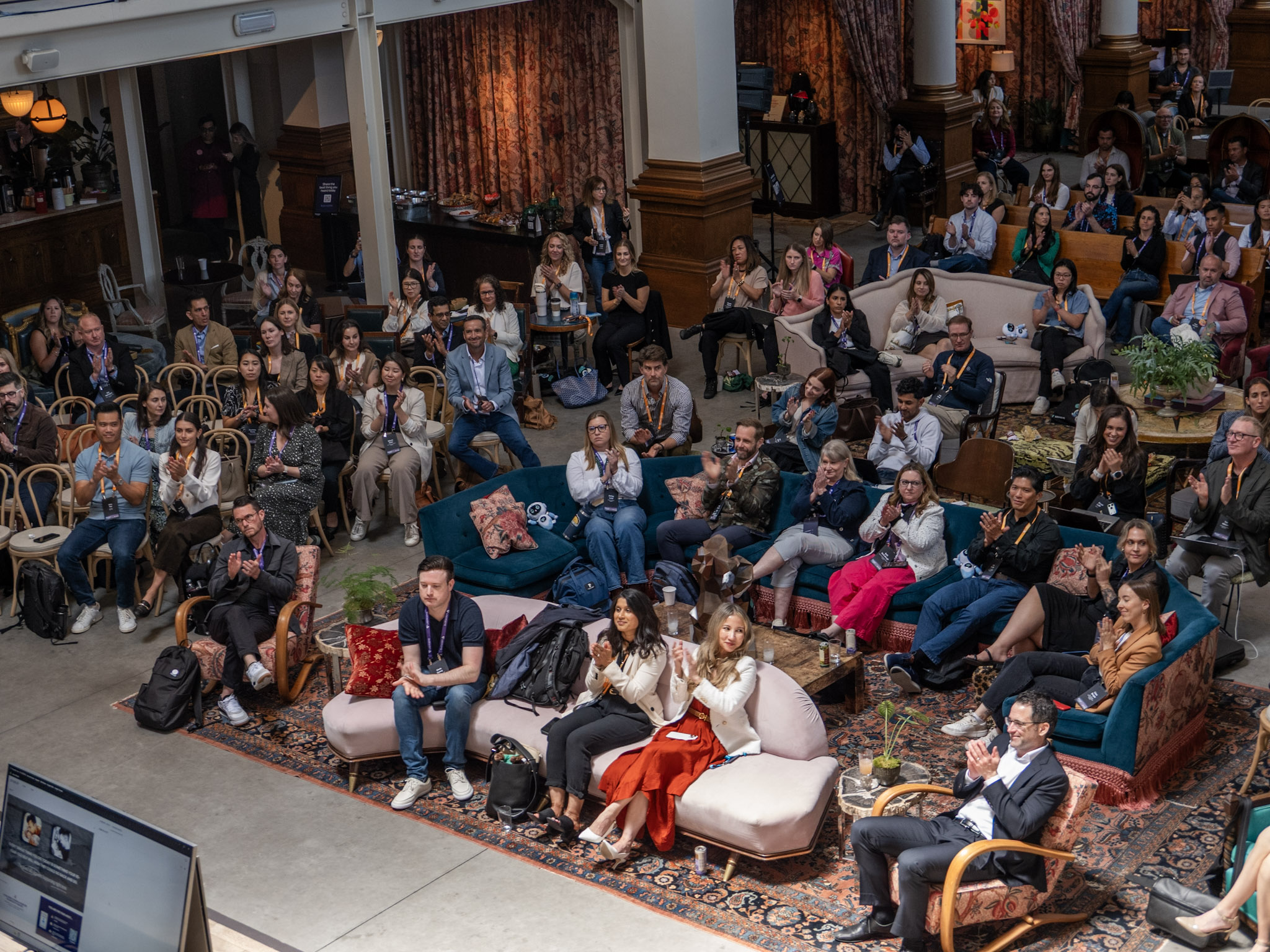
[San Francisco, CA] — June 30, 2026 — UserGems, the AI command center for outbound and ABM, hosted its inaugural Humans of GTM event on June 17, 2026 at Saint Joseph's Arts Society in San Francisco's Mission District. 150 vetted B2B GTM leaders gathered for a day of product announcements, real-world playbooks, and a keynote from New York Times bestselling author Sahil Bloom, and left with a first look at where UserGems is going next: headless.
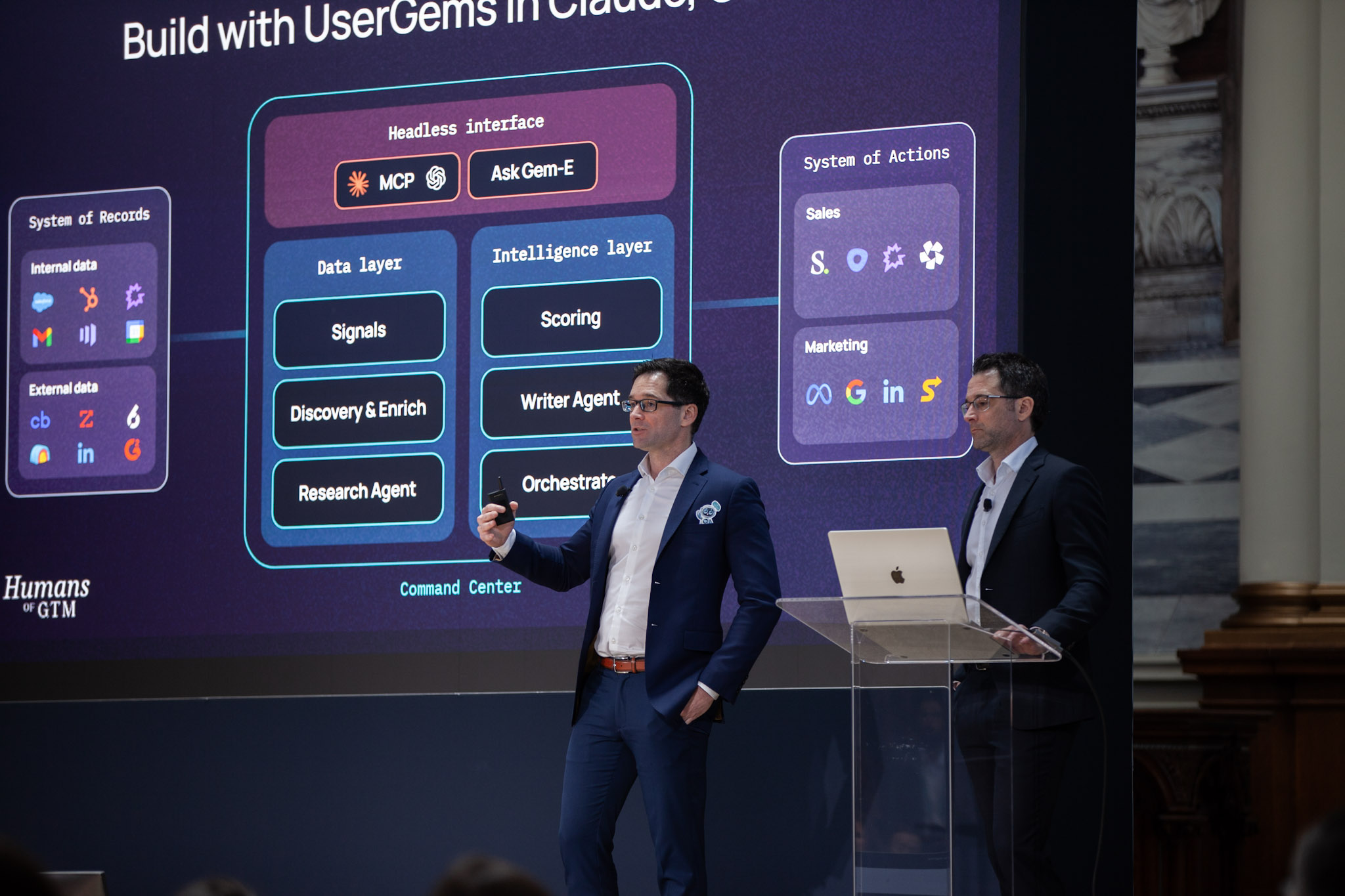
UserGems goes headless: Introducing the UserGems MCP
The event's headline announcement: UserGems is going headless, making the full platform accessible directly from Claude, ChatGPT, and any AI assistant that supports MCP.
"The go-to-market tech stack of the future needs a brain in the middle," said Christian Kletzl, CEO and Co-founder of UserGems. "The MCP means that brain is now accessible from wherever you already work."
Stephan Kletzl, CTO and Co-founder, demonstrated the capability live onstage, building and adjusting a campaign from scratch inside Claude, without touching the UserGems UI. The room got a first look. Full details and public release are coming soon.
For updates, be sure to subscribe to our newsletter.
Customer results: What "AI Command Center" looks like in practice
Across sessions and panels, customers shared outcomes from using UserGems.
Docebo (Mark Kosoglow, CRO) restructured its entire BDR motion around 17 stacked and weighted signals, giving each rep a daily list of their 30 warmest prospects with pre-drafted emails from Gem-E ready to go. The result: dials went from 50 to 200 per day, March 2026 was the best outbound month in the company's 17-year history, and April beat it. Qualified opportunities are up 4x since July 2025. "Pipeline cures all ills," Kosoglow told the room.
Mimecast (Zoe Burchenal, Director of Growth Revenue Marketing) has over $20 million in UserGems pipeline and has seen an 8x increase in opportunities booked from UserGems plays over the last six months — largely by automating champion outreach end-to-end and bringing BDR leaders into the setup process so they trust the signal logic behind who they're reaching.
HubSpot (Clara Borges and Janet Wood) shared the full arc of their signal strategy: starting with company-level intent in 2023, adding job change signals in 2024, and graduating to contact-level intent in early 2026. The progression produced 2x more deals year-over-year, $19M in closed ARR, and a 6x lift in deals from contact-level intent vs. company-level alone. "AI is only as good as the signals feeding it," said Borges. "If the data layer is messy, the AI won't work right. That's where we started."
CaptivateIQ (Kristen Wisdorf, Sr. Director of Business Dev & Inside Sales) described the moment skepticism turned to belief on her BDR team: "The first prospect replied to a Gem-E message saying 'I'm not the right person, but I'm replying because of how good this is.' That was it. Skepticism went away fast."
Frontify (Alexander von Stegmann, GTM Strategy & Engineer) went from evaluation to full deployment in three months — faster than any other AI initiative at the company, largely because UserGems' security documentation cleared legal review immediately. By February, BDRs were operating from a scored book of business with AI-drafted outreach, something they'd wanted but couldn't build. "Some days it's just UserGems opportunity after UserGems opportunity being created," von Stegmann said.
How to get your team to actually use Gem-E
Before the general sessions opened, UserGems customers spent the morning in a panel on what real Gem-E adoption looks like — the messy middle between "we bought this" and "reps are believers."
The through-line: internal marketing matters as much as setup. Kristen Wisdorf (CaptivateIQ) built a weekly "Shine a Light" segment into Monday kickoffs where reps sharing Gem-E wins peer-to-peer, not top-down. "They will believe each other and they will believe prospects," she said. "They won't believe their leaders." Managers now pull up UserGems in 1:1s, sitting side-by-side with reps to review signals and account scoring, turning it from a tool into a workflow.
Zoe Burchenal (Mimecast) took a different path: she started automating everything champion-related the moment reps didn't action it within 7 days. Over time, BDRs began trusting the Gem-E messaging so much that they'd self-select the top leads to work manually and leave the rest for automation. "We're reaching out to fewer people now and getting more opportunities," she said.
Alex Von Stegmann (Frontify) prioritized fixes based on whether something was blocking work entirely vs. just needing improvement — and iterated on personas and messaging until reps stopped coming to him with complaints and started asking for more leads.
The common thread across all three: don't over-promise the scope. Start narrow, show one campaign working, then expand from there.
.jpg)
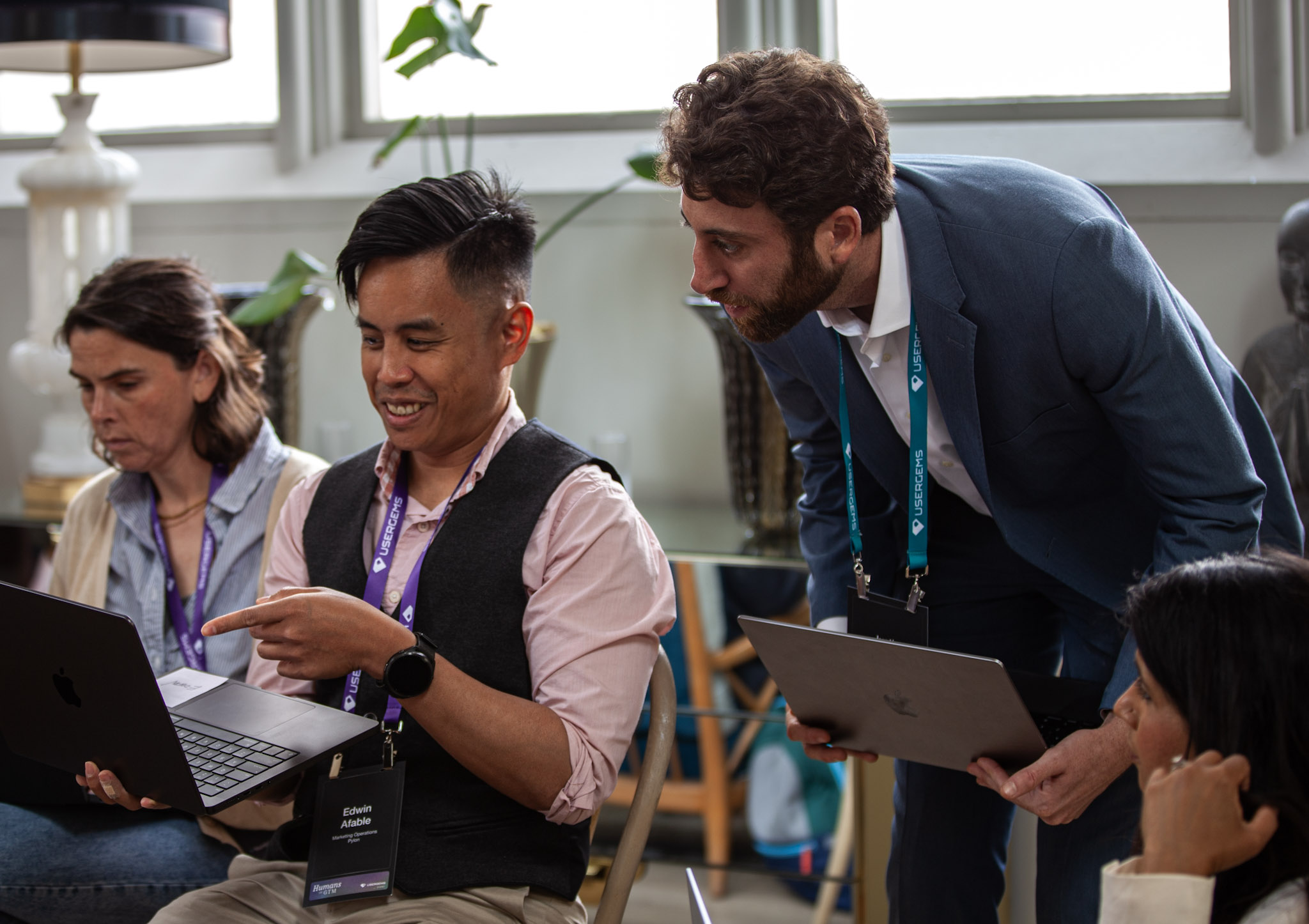
The morning also included two hands-on workshops, an Event Outreach build and a Competitive Takedown, where attendees built live AI campaigns inside their own UserGems instances, ready to activate for their teams.
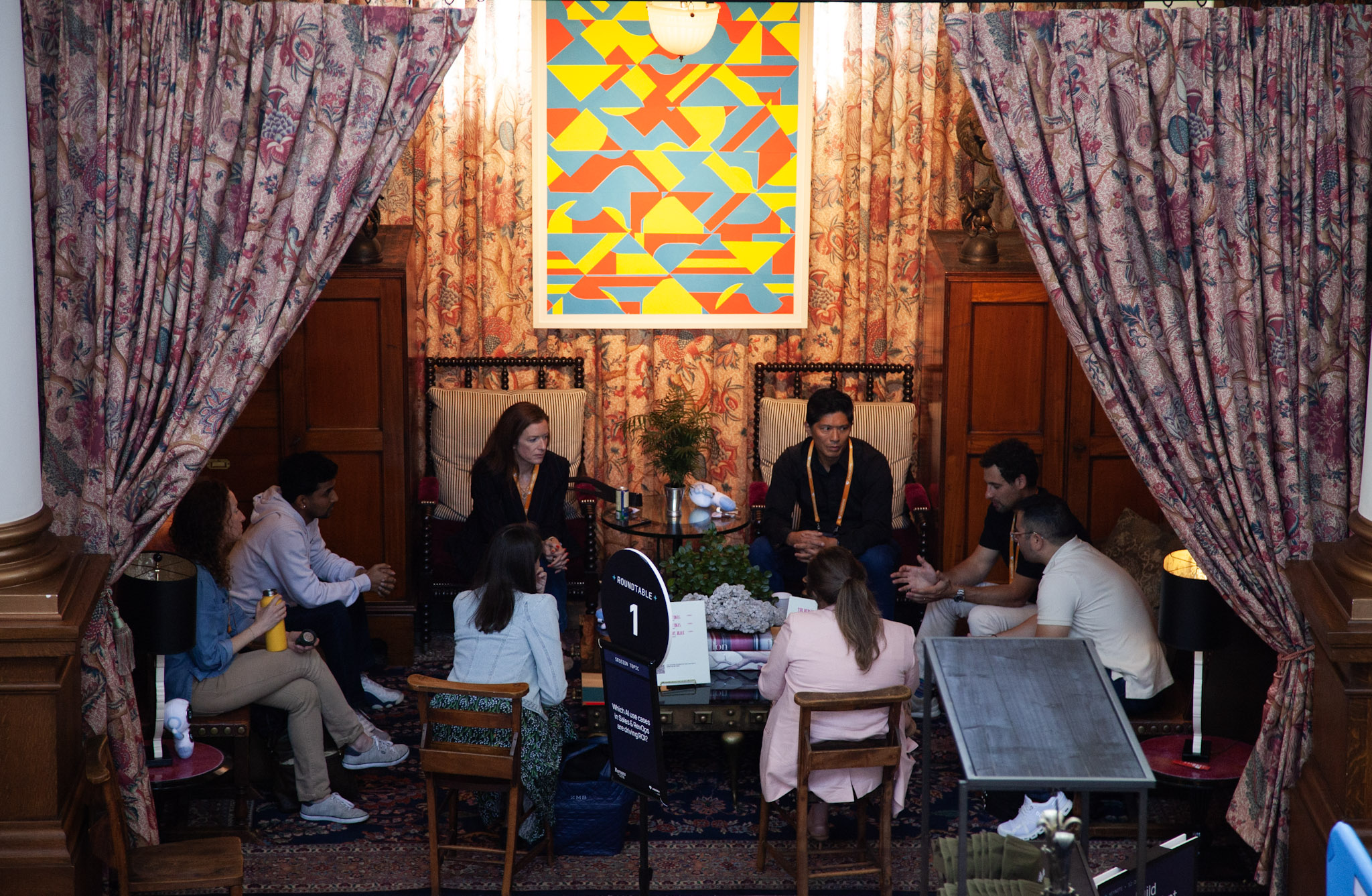
In the afternoon, 15 moderated roundtables gave attendees 8–10 peers per table to go deep on the tactics most relevant to their own pipeline challenges. Topics spanned signal strategy, BDR workflow design, AI adoption, ABM execution, and RevOps infrastructure — each table moderated by a practitioner who'd been in that seat. The format kept conversations grounded: no slides, no pitching, just operators comparing notes on what's working and where they're still stuck. For many attendees, it was the most valuable time of the day.
Kosoglow's Framework: Stop adding, start subtracting
In a standalone playbook session, Docebo's Mark Kosoglow made the case for defining AI-first GTM around removal, not addition.
"The job of a sales leader is to be a broken record," he said. "Every time someone asks about AI, I ask: what inconsistent human decisions are you getting rid of? What poor execution are you eliminating?"
His framework for build vs. buy decisions resonated with the room: build for yourself; build or buy for a team; always buy for required workflow tools and systems of record. For tools like UserGems — where reliability at scale matters — he was direct: "When it breaks, I don't want to figure out who wrote the code six months ago. I want Christian and Stephan to handle it so I can worry about pipeline."
.jpg)
Speed to context: The new standard for revenue teams
A panel featuring leaders from LeanData, memoryBlue, and Sendoso explored how AI is shifting the standard from "speed to lead" to "speed to context" — the idea that fast isn't enough if the rep walks into a call cold.
Austin Sandmeyer (Sendoso) described their AI brief workflow: every demo request triggers a chain of classic enrichment, Salesforce history, buying committee mapping, and use case matching — all delivered to the rep in Slack before they pick up the phone. "The rep should never say 'How can I help you? I have no idea what brought you here,'" he said. "That should never happen."
Jane Serra (memoryBlue) connected the dots to event strategy: UserGems, Salesforce, and Claude can now cross-reference a conference reg list against existing customers and open opportunities in minutes — so reps know exactly who to prioritize the moment they walk in the door.
The panel also covered Jim Bell's (LeanData) work with Uber for Business, which deployed four AI agents across onboarding, outbound, and inbound workflows and saw a 22% revenue uplift, 23% cost reduction, and 28% increase in outreach capacity.
.jpg)
HubSpot: Building the foundation before turning on agents
HubSpot's Clara Borges and Janet Wood traced a multi-year journey from commodity intent data to a unified signal engine now being fed to AI agents.
Their key lesson: most teams deploy AI before the data is ready. "We got very mixed results early on — automation misfired, messaging was generic," Borges said. "The reason was we didn't have our data set up right. Bad data in, bad data out."
The fix was building the foundation with UserGems first: consolidating first-party signals, adding job change and new hire signals, and gradually graduating to contact-level intent. That foundation now supports the HubSpot AEO product launch, a Clay-powered AI summary layer, and, eventually, AI agents with access to a single source of truth across the organization.
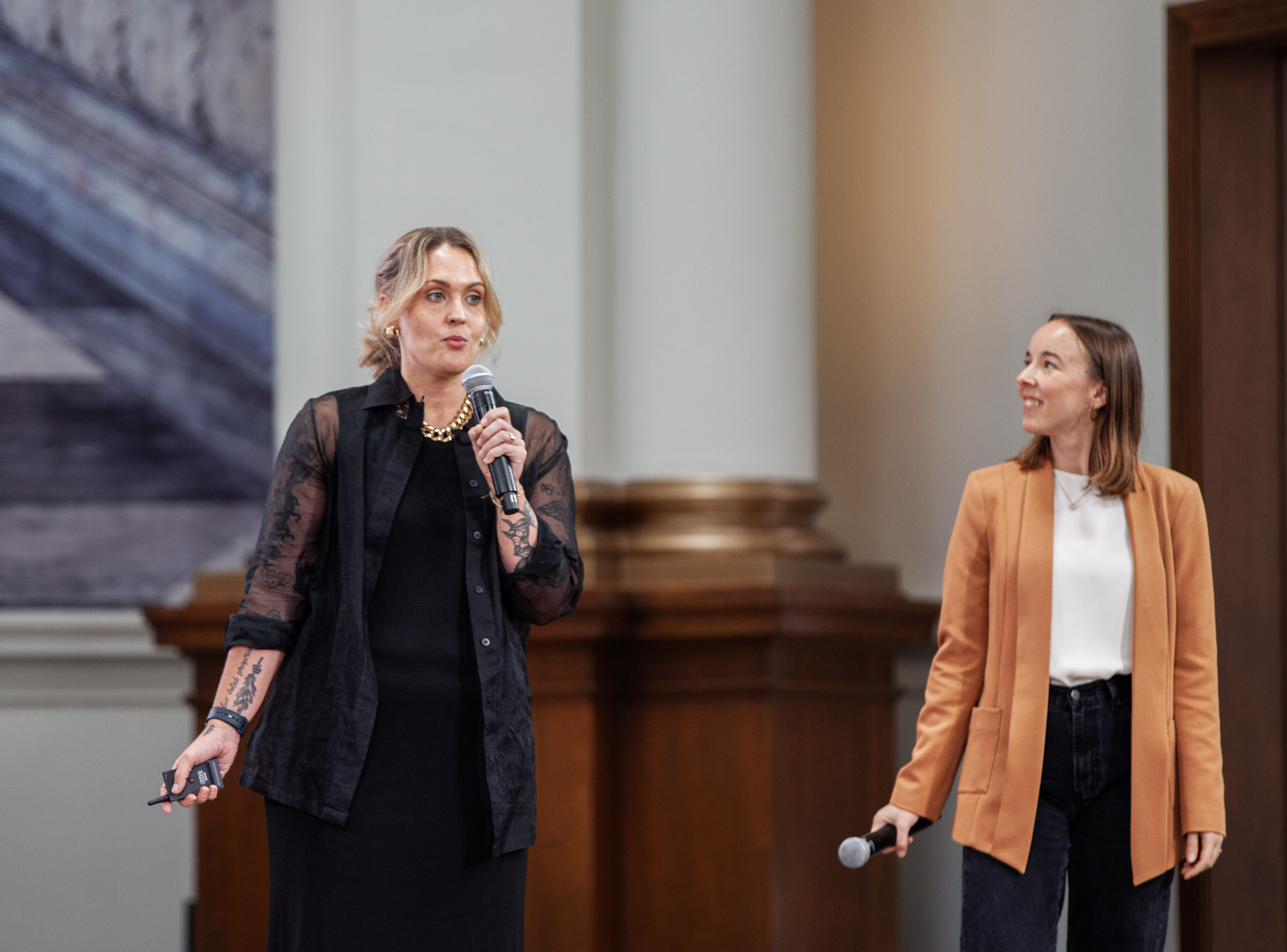
Sahil Bloom: The keynote that wasn't about AI
NYT bestselling author Sahil Bloom (The Five Types of Wealth) opened the afternoon sessions with the only talk of the day that didn't mention AI. Instead, he asked the room to think about what the audience would be screaming at the main character of their life right now.
Drawing on the five types of wealth (time, social, mental, physical, and financial), Bloom made the case that the most commonly measured thing (money) is the least predictive of a life worth wanting. He cited Harvard's 85-year study of adult development: relationship satisfaction at 50 predicts physical health at 80 more than cholesterol, blood pressure, or any other marker. And he offered the math that changed his own life — realizing he had about 15 visits left with his aging parents before he moved across the country to fix it.
"The good old days are quite literally happening right now," he told the room.
The choice to anchor an AI GTM event in a talk about wealth beyond revenue was intentional. "AI can't identify and enforce your personal priorities," said Kletzl in his introduction. "That's what Sahil does."
.jpg)
Humans of GTM ended with a DJ, open bar, and the kind of conversations that never happen on LinkedIn. UserGems plans to host the event again next year. Follow @UserGems on LinkedIn and sign up to our newsletter for updates on future events.
About UserGems
UserGems is the AI Command Center for B2B revenue teams, the brain that sits between your CRM and execution tools. We unify signals, prioritize buyers using transparent AI scoring, and deploy AI agents (Gem-E) to automate outbound and ABM execution. Customers include Mimecast, Workday, Salesloft, Sendoso. Learn more at www.usergems.com.
.png)
.jpg)
.png)