Sales acceleration strategies deliver real results. They streamline your sales workflow, save reps time, and move prospects through your pipeline faster, so you close more deals and grow revenue.
Sales acceleration removes friction from your sales workflow, cutting manual tasks and giving reps clear processes that build confidence. It also moves prospects through the sales pipeline faster, allowing you to close more deals and grow revenue.
Below: why sales acceleration matters, which tactics actually work, and which tools your team needs to get started.
What is sales acceleration?
Sales acceleration means removing inefficiencies from your sales process so prospects move faster through your pipeline—and you close more deals.
It removes inefficiencies so you deliver better prospect experiences, improve team productivity, and grow revenue.
Why does sales acceleration matter?
Sales acceleration grows revenue and tightens your sales process. It also helps teams hit quotas, reduces pipeline anxiety, and strengthens customer relationships.
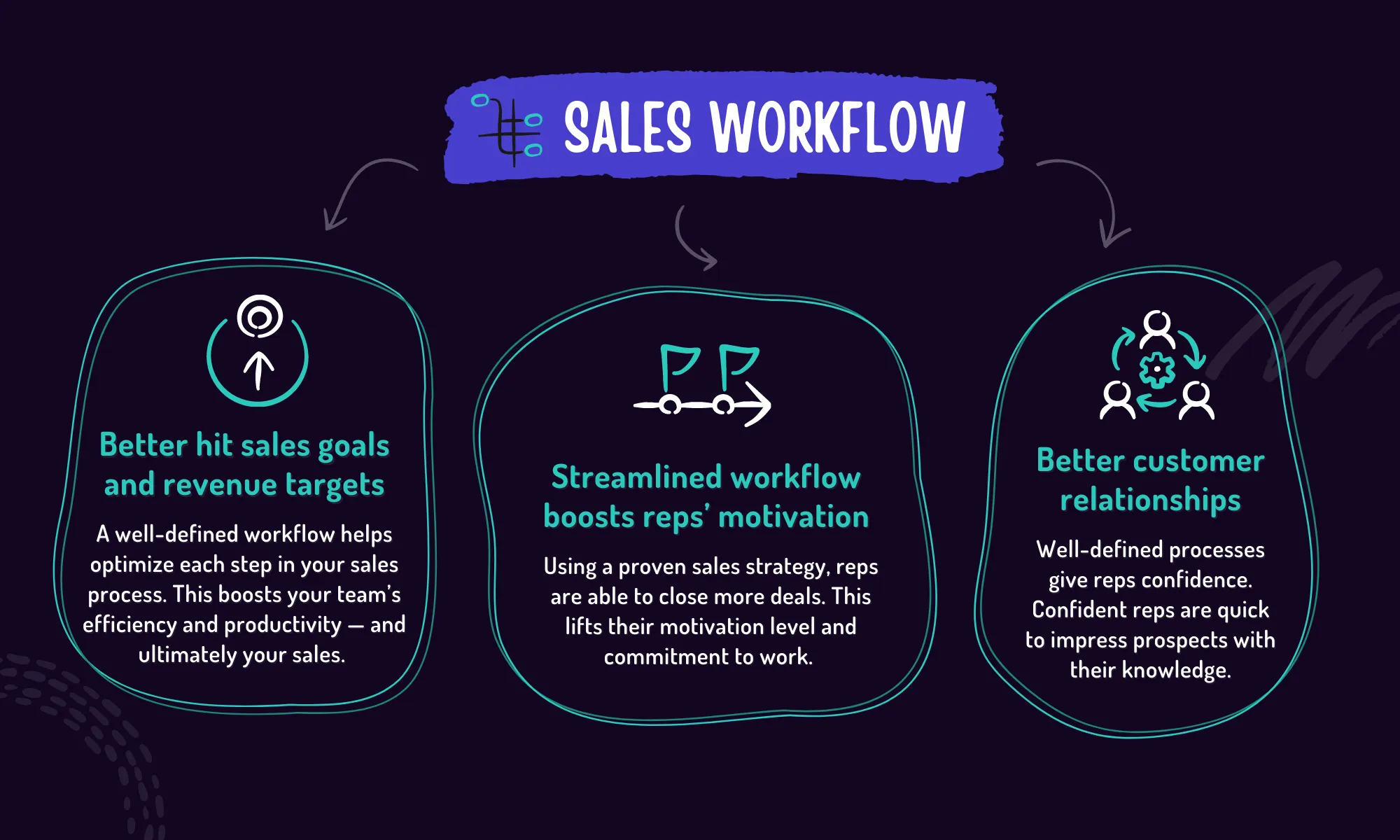
1. It helps you to hit sales goals and revenue targets
Clear sales workflows and the right acceleration tools remove friction at each step, so your team closes more deals faster. In turn, this helps you accelerate your time to revenue, grow sales, and meet your goals.
2. Streamlined workflows reduce pipeline anxiety
Clear sales processes give reps confidence as they move prospects through the funnel. What’s more, using a proven sales strategy, reps are able to close more deals, reducing pipeline anxiety.
This keeps reps motivated and focused on hitting quota—not stuck in frustration.
3. It builds better customer relationships
Clear processes and trained reps demonstrate you understand prospect problems—and know how to solve them.
The right sales acceleration software automates manual tasks, giving reps more time for actual selling.
This improves the entire prospect experience—from first contact to closed deal. Better experience means higher close rates.
B2B sales acceleration strategies
Here's how to apply sales acceleration to your business. We asked industry experts which sales acceleration tactics deliver the best results.
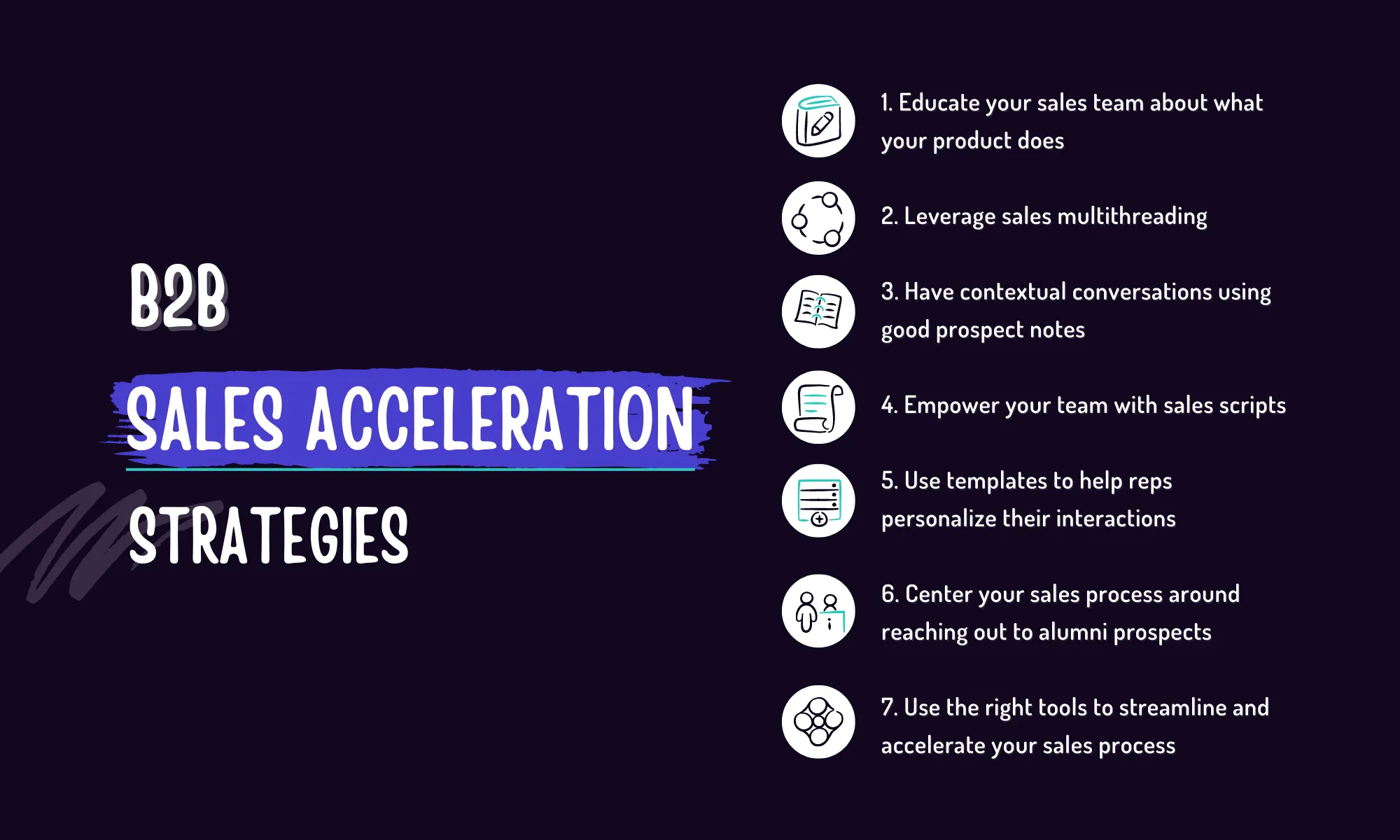
1. Educate your sales team about what your product does
If reps don't understand how your product helps users, they can't sell it effectively.
Train reps on how your product benefits prospects and solves their specific problems.
“If your sales team is only selling products, they will be limited in the number of opportunities they can close,” observes Neutypechic’s Co-Founder, Patricia Jones. However:
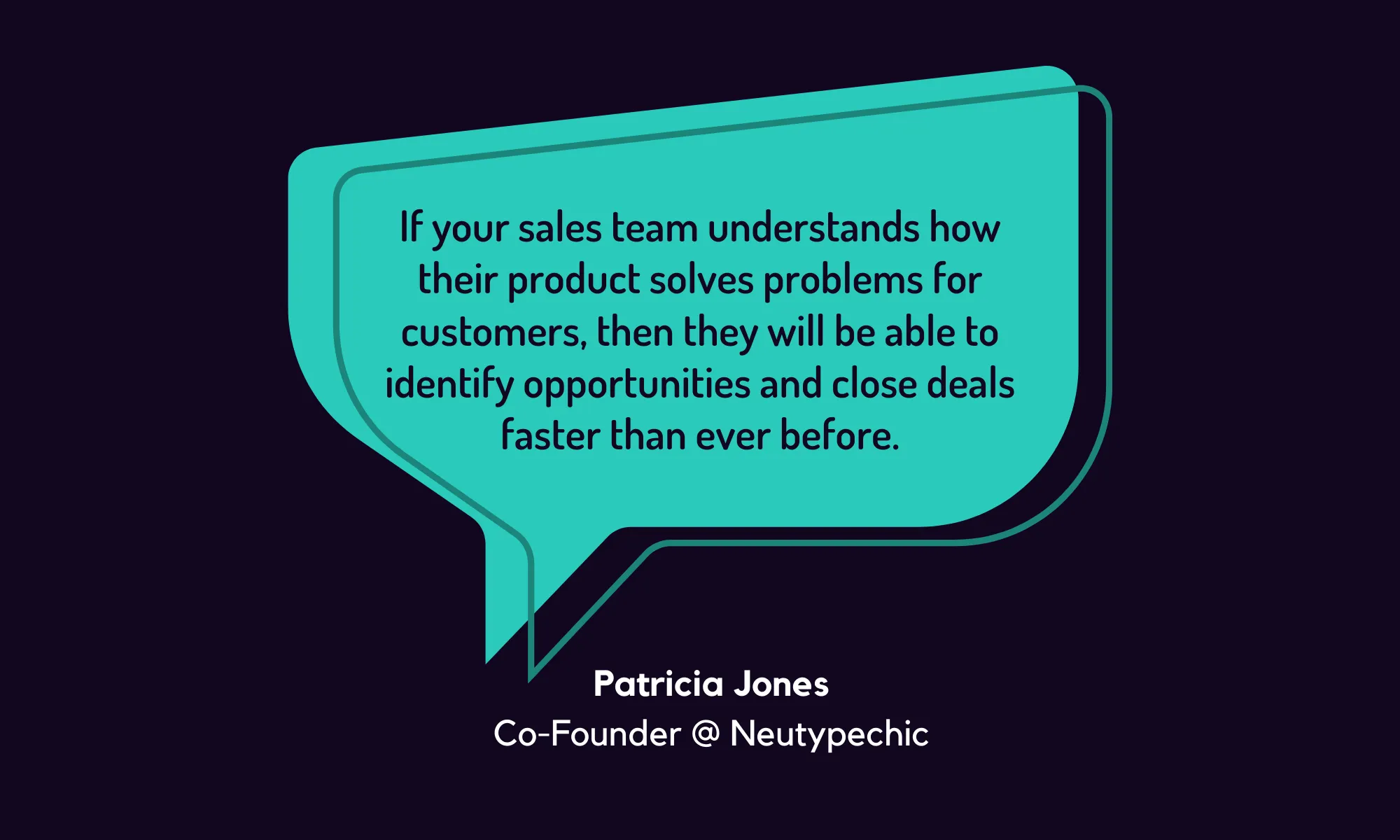
It’s why Jones recommends training the sales team to understand how the product they’re selling helps its customers. By doing so, you empower reps to take a value-first approach instead of employing product-first sales tactics that aren’t as effective in closing deals.
2. Leverage sales multithreading
Sales multithreading involves nurturing multiple contacts from one target account instead of just focusing on one (single threading).
Multithreading delivers three key benefits:
Shorten the sales cycle
Increase deals success rates
Close deals faster
Multithreading also reduces single-point-of-failure risk. For example, if they were to resign from the company you’re targeting, you would have to start all over again.
Our data shows the impact clearly. Single-thread deals have a 5% win rate. In contrast, multithread deals or deals where you’re in contact with up to five people at a target account have up to a 30% win rate. That's a 6x improvement.
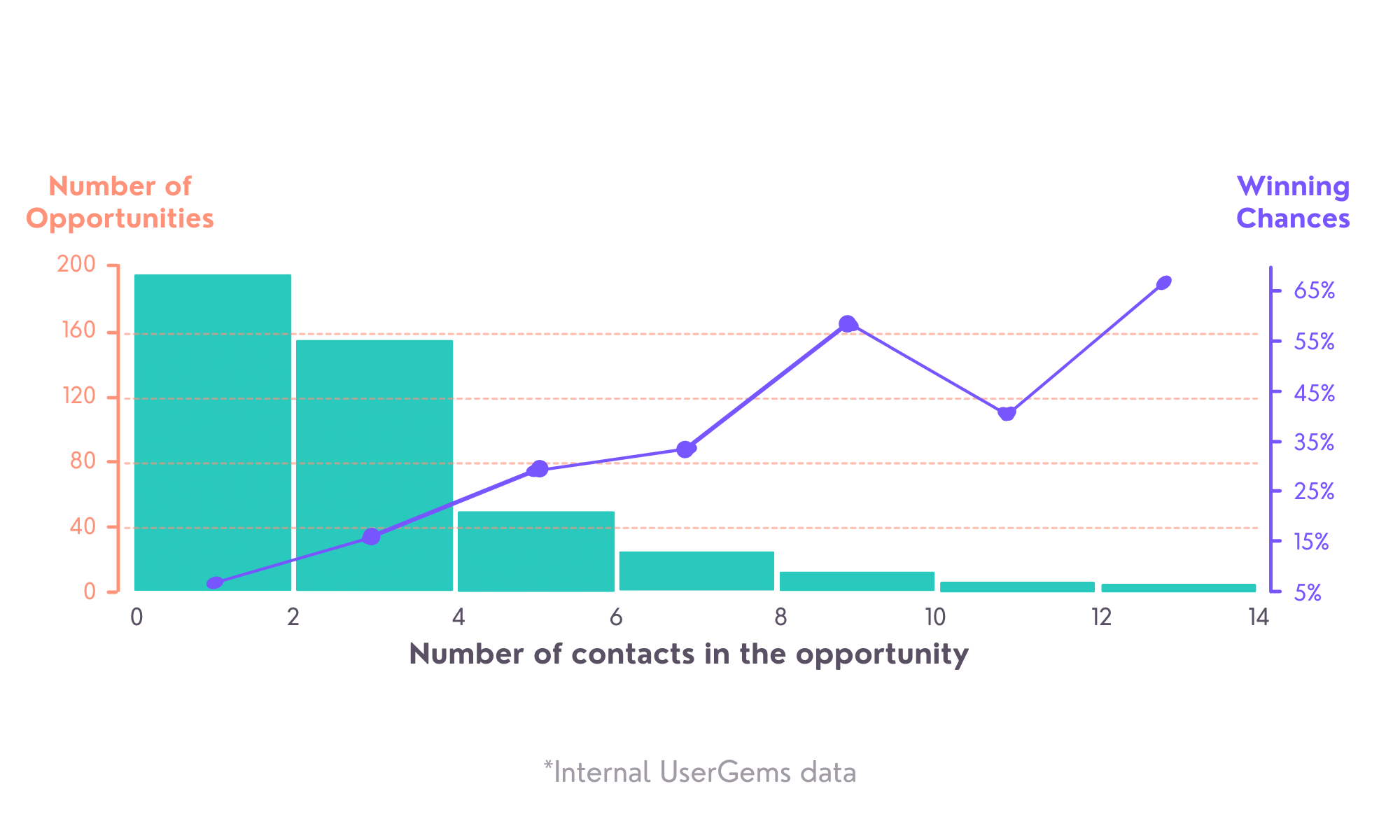
Source: 4 pipeline generation playbooks|UserGems
Decision-makers rarely decide alone. Becc Holland, CEO & Founder of Flip the Script, talked about this in a UserGems webinar.
Holland shared, “I wouldn’t view the decision-maker as the decision-maker. The decision-maker is the final person for sign-off. But they’re supported or detracted by everyone around them. A good decision-maker listens to their team. They don’t make decisions in a silo. So, you need to think of everyone on the sales call as having equal weight. And win them all on your side.”
How to start multithreading: Blaise Bevilacqua, the Enterprise Account Executive at UserGems has the answer for you:
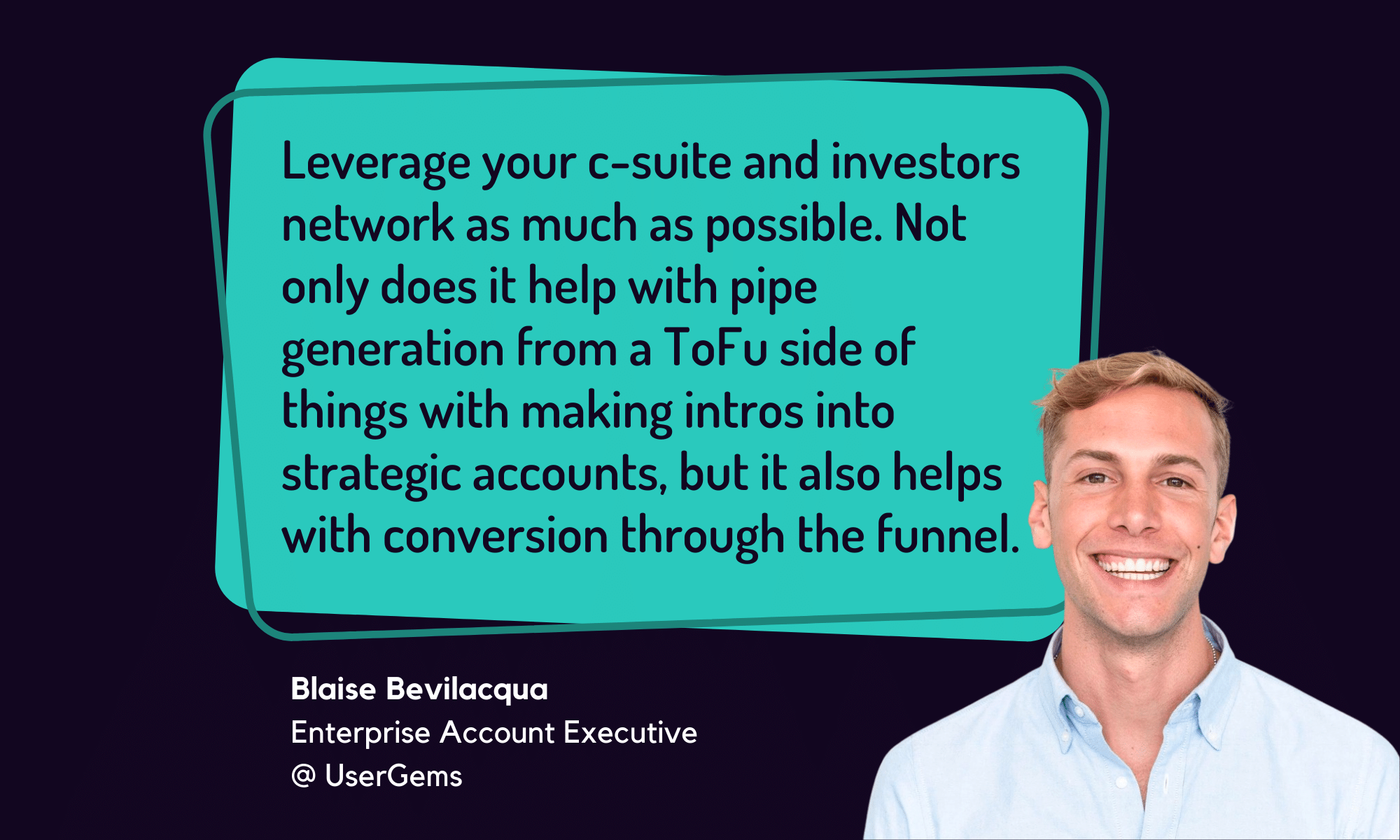
Bevilacqua explains this with an example: “Stuck in SLIP (security, legal, infosec, procurement) and notice your CFO has a mutual connection with the prospect’s Chief Legal Officer? Bring your executives into the fold and have relationships help un-stick deals that are BoFu.”
3. Have contextual conversations using good prospect notes
Prospects notice when reps come prepared with context. For instance, a rep who remembers the struggles a prospect shared in early email communications.
By keeping tabs on prospect data — from their demographic detail to their work experience — reps can lead meaningful conversations with prospects.
However, manually maintaining notes on all these details only adds more work to a rep’s plate. UserGems Meeting Assistant automates this research.

It pulls contact research directly into your CRM. Plus, it emails you these details daily and gives you a heads-up about whether an account has been contacted by anyone from your team in the past.
Bevilacqua uses the Meeting Assistant for these two use cases: “I use the daily digest email every day as a helpful guide to conversations. It lets me know if a.) the contact has had any relationship with meeting UserGems in the past, b.) maps out who else they've met with and how many times.”
Derek Wang, UserGems’ Sales Manager, also uses the Meeting Assistant to nurture leads and speed up the sale process. In Wang’s words:
“[Meeting Assistant gets] me ready for who I’m meeting with. When I know exactly who I’m meeting with, I am able to send relevant content. And connect on LinkedIn beforehand with personalized notes. Often times I single-thread individual prospects to get additional discovery and give more tailored content.
[It adds] more stakeholders to my opps. I always know who has been involved in the deal at a high level. So I can refer back to specific people. Also, UserGems lets me know if champions leave mid-funnel so I can prevent deal risk.”
4. Empower your team with sales scripts
Sales scripts are performance guides sharing proven sales tactics and strategies that reps can refer to during their interactions with prospects.
These help you with B2B sales acceleration by training teams to use tactics that have been helping their managers and peers achieve great results. Sales scripts require active demonstration beyond simple distribution to reps. Demonstrate how the script works in real conversations.
For example, give reps access to call recordings of their peers using the sales script to successfully move leads down the funnel. Or, take calls in front of your reps to show them exactly how to put the script to work.
At minimum, give reps a list of discovery questions that uncover pain points and move deals forward.
Caroline Pegram, Senior Account Executive at UserGems, shares one question that all reps should ask on their prospect calls: “what makes NOW a good time to look at ________?”
“I get answers ranging from ‘my CMO told me to look into this since he missed an Inmail from a customer who moved' to ‘I’m building my budget and determining which tools we want next year’ to ‘we missed our pipeline goal by 20% last quarter and need new channels.’”.
“The reason this question is so valuable is that now you’re going to take the conversation with the three people above in completely different directions,” explains Pegram.
“In one, you’re going to grow their understanding so that they understand the scope of the problem — also big multithreading opportunity here. With the second one, you’re going to spend more time educating them on where your product is positioned in the market and get really granular about it. The last one is the easiest to tie to impact so you can work with them to move quickly to start building the pipeline for their next month/quarter.”
5. Use templates to help reps personalize their interactions
Every prospecting strategy requires personalization to close deals effectively.
“For high-value accounts, one of the best ways to stand out is bycreating a personalized sales room for the prospect. The digital sales room is a personalized landing page that includes everything the prospect needs to know about your solution, from your demo videos to case studies to pricing,” notes Alex Kracov, the CEO and Co-Founder of Dock.
Personalization takes time, which can slow your pipeline. Customizable templates solve this problem.
Kracov points out:

6. Center your sales process around reaching out to alumni prospects
Target warm leads to reduce pipeline anxiety and accelerate sales.
Track customer job changes. When past customers move to new companies, they often bring your product with them.
These alumni customers advocate for your product at their new company. They're also actively building their tech stack in their new role.
Internal data from UserGems’ pipeline generation software confirms new executives spend 70% of their budget within the first 100 days.
You reach warm leads at exactly the right time.
Manual tracking doesn't scale. Automate job change tracking so reps can focus on closing deals.
Cobalt’s Director of Business Development, Ryan Murray, who is also a UserGems customer, agrees, “For us, the customer-job-change trigger use case was a no-brainer. Trying to track this otherwise would have been a manual and difficult process on LinkedIn. And we would have things slip through the cracks.”
So they started using UserGems to track job changes to accelerate their sales. The result? 12x the ROI in only a year of using our pipeline generation software.
7. Use the right tools to streamline and accelerate your sales process
The right tools speed up your process and close more deals. They boost team productivity, helping everyone hit quota and grow revenue.
Pipeline generation software like UserGems tracks prospect signals—like job changes—so you build a qualified pipeline.
Similarly, a tool like Cabal will show you whether the prospects you’re targeting are connected with folks in your leadership.
Blaise Bevilacqua, UserGems’ Enterprise Account Executive who uses this tool, shares, “[Cabal] ingests your CRM’s deal board and maps your leadership/investor’s network to any connection within the target account."
“If there's a real connection, it's an easy ask. A message to a decision maker from a friend that looks like, ‘Hey Jane, have ya'll checked out UserGems yet? It’s found money. LMK if you want an intro. Pretty close to their team.’ is way more impactful than cold outreach.”
Sales acceleration tools improve team productivity, enable personalized outreach, and reduce pipeline anxiety.
The 3 most important types of sales acceleration software
B2B sales acceleration tools save time, enable personalized outreach, and help you connect with prospects on what matters to them.
Focus on these three categories of tools that deliver the most impact.
1. Sales intelligence tools
Sales intelligence tools collect prospect data to give you insider information, like which accounts to target to drive more sales. For example, sales intelligence tools may surface contact data for businesses searching for tools like yours.
B2B intelligence software like Cabal helps you target warm leads and personalize your outreach.
2. Sales pipeline generation software
Pipeline generation tools surface warm accounts to target, reducing pipeline anxiety.
UserGems, for example, tracks customer job changes so you can target alumni customers (who’ve already used your tool and hopefully love it). Pipeline generation software fills your pipeline with warm leads, so you accelerate your pipeline with warm leads, pipeline generation software helps you close more deals, and hit quota.
3. Customer relationship management (CRM) software
CRM software centralizes prospect information, automatically updates it, and provides features that help close deals.
For instance, CRM platforms will often give you a lead score to:
Determine how relevant a lead is to your business
Help with sales forecasting
Show you which stage each deal is in
You can also do this using separate lead-scoring software.
How to pick the best sales acceleration tools for your team
The best sales acceleration software solves specific sales problems and fits naturally into your workflow, so adoption is high and results follow.
Start by identifying your sales problems. Check your analytics for where the process stalls and performance drops. Ask your team where they need help.
If you need better pipeline quality, use pipeline generation software.
Once you know your problems, find tools that solve them. Research options and ask your network for recommendations.
Evaluate each tool on:
Ease of use
Ease of use drives adoption. Choose tools that fit your team's current workflow and don't require extensive training.
Pricing
Review both current and long-term pricing. Make sure the tool scales affordably as your team grows.
Integrations
Check how well the tool integrates with your existing stack. Good integration means data flows automatically between tools.
Sales tools must integrate with your CRM, where all contact data lives.
When tools integrate, reps see all data in one place—no context switching required.
UserGems, for instance, integrates with Salesforce to show the alumni customers it tracks in your CRM. This way, you can see new accounts to target straight in your CRM — No additional admin work is required.
Customer support and documentation
A proactive customer support team helps answer questions that you may have as you evaluate, integrate, and adopt the new tool. Similarly, comprehensive documentation provides you with resources that make the tool adoption process even easier.
In short, answer these questions as you select the best sales acceleration software:
✅ How does the tool help solve our sales problem?
✅ How much onboarding and training does the tool require?
✅ How well does the tool integrate with our workflow?
✅ Can we afford this tool now and as we grow?
✅ Does the tool offer resources for us to make its adoption easy?
Ready to improve your sales acceleration?
There’s a lot that goes into optimizing your sales process and choosing the right tools to grow revenue.
To begin today, though, review your sales process to identify its shortcomings. Look for steps that need immediate improvement. And talk to your team to understand where they need the most help.
Then choose and implement the sales acceleration strategies that’ll help you deliver the most impact.
Don’t forget, you’ll also want to invest in the best sales acceleration tools to solve your specific struggles. If you’re looking to build a healthy sales pipeline, for example, we recommend UserGems 😃

.png)
.png)
.png)